
South Luangwa to Malawi, October 2022
Lilongwe & Family Visit
After lounging on the banks of the Luangwa River in Zambia, we head to Chipata. There is a severe shortage of lots of goods in Malawi because of forex issues so we stock up on some goods plus a few things for family in Malawi. We also fill up with fuel including our jerry cans as there are frequent fuel shortages across the border, and even when it is available, it is extremely expensive.
The Zambia-Malawi border is pretty informal as official borders go. The Zambian side of the border feels like an old medicine dispensary repurposed. The system works however. Everyone knows what they’re doing, are very nice and we’re through a lot quicker than I would have thought. A few very insistent ‘fixers’ follow in our wake giving us unsolicited advice at every turn which is a bit off-putting. We ignore them. The most persistent of them follows us to the Malawian side and continues there. We continue to ignore him.
The Malawian side of the border is more formal with a real building and everything and probably one of the most brain-aneurysm-inducing bureaucracies I have ever seen. There are three windows to use and you need to use each one more than once in a very specific order. The big man who takes the money insists that you write out your own receipt on a petty cash voucher which makes no sense at all. You even have to know the inter-governmental expense coding system to complete the petty cash voucher. The big man gives us a lecture when we ask about the petty cash voucher sections and admonishes us for not knowing Malawian standard operating procedure. Kirsty is able to manage the big man much better than me so I step back to rail quietly against the nonsensical system in my head. Our ‘fixer’ has finally given up on us.
Lilongwe turns out to be a sprawling African metropolis set along the Lilongwe river. It is mostly flat with traffic circles interspersed often by large tracts of unused land. The buildings are low with no significant high rises… a good place to grow up.
We drive into a suburb near one of the international schools and are greeted by my very friendly and hospitable cousin and his equally lovely family. Their home and garden is large compared to first world expectations. We enjoy spending the weekend with them catching up on everyone’s stories. We also agree to join up with them in a few weeks time in northern Malawi. After listening to their stories we decide that we want to explore Malawi a bit more and are going to devote a few more weeks to the country.
Our leaving is delayed by a few days to vulcanise the tyre with the patch repair and we have a mechanic, a friend of my cousin and a great guy, give the vehicle a once over. There was a ‘check engine’ light on for a large part of the Great East road in Zambia so better safe than sorry. He gives the hilux the all-clear.
My cousin also has something I’ve been trying to find for ages – a workbench with a vice! Using the vice and his angle grinder I’m finally able to make some adjustments to the nuts and bolts on our roof rack jerry can holder. With the right tools (and advice) you can conquer the world!
Food and drinks are indeed expensive in Malawi and we’re glad that we were able to pick so much up in Zambia on their advice. We are also surprised to find a very big difference in cash versus bank rate and so swap our hard cash GBP and some USD with the official forex company instead of using payment card.
With a big thank you and a wave we head south to explore some of Malawi. We will catch up with my cousin and family later in the month.
Lake Malawi, Diving & Cichlids
It has always been a dream of mine to dive or snorkel in one of the Great Lakes of Africa. Lake Malawi is the third largest and second deepest lake in Africa and arguably also one of the clearest for diving and snorkelling. Almost perfect for a dream adventure.
On our travels we try not to spend too much money day-to-day. If we watch the spend, we can travel longer. This often means that if we like a place (like we did South Luangwa) then we stop for up to a week and just enjoy the environment while cooking simply and getting some exercise in. It’s difficult to focus on exercise and your hobbies when you’re constantly on the move. Fuel costs goes down if you don’t mission around too much. If you save money most of the time then you’re able to afford the big things like a dive!
Cape Maclear turns out to be one of these perfect places so we pretty much instantly decide to settle in for about a week. My cousin told us about a lodge called Chembe Eagles Nest resort. We arrive after driving through the national park section and then the fishing village of Cape Maclear. The resort is the furthest place north of the bay and sits beside a mountain range which mostly surrounds the small fishing village. The view from the resort is pristine, with white sand and the expanse of Lake Malawi in front of you.
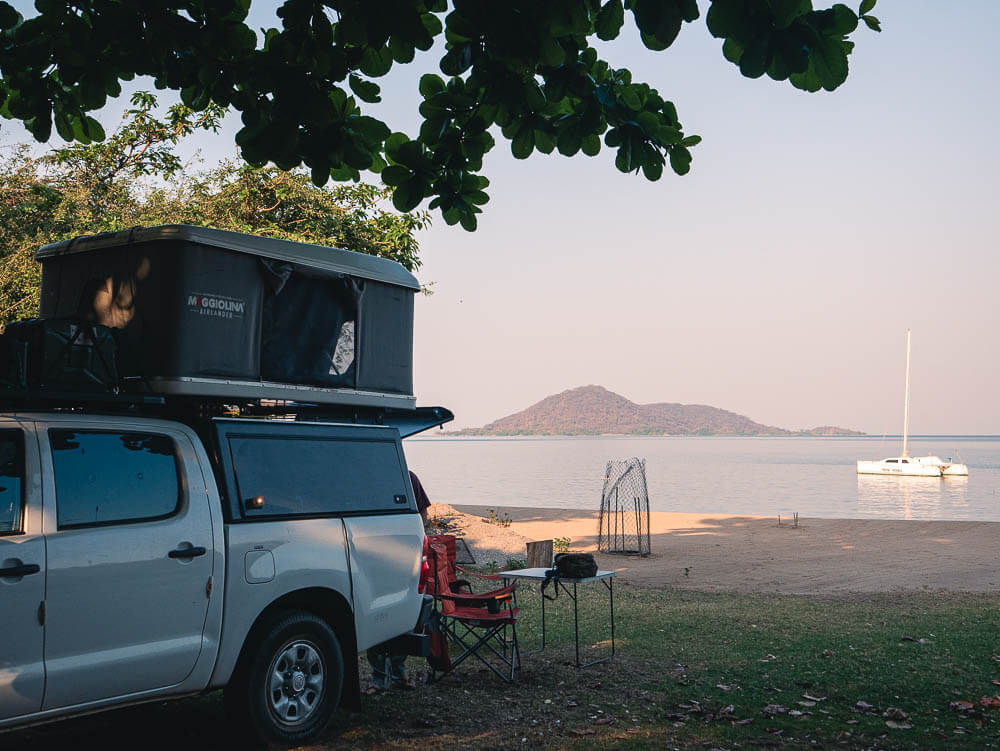
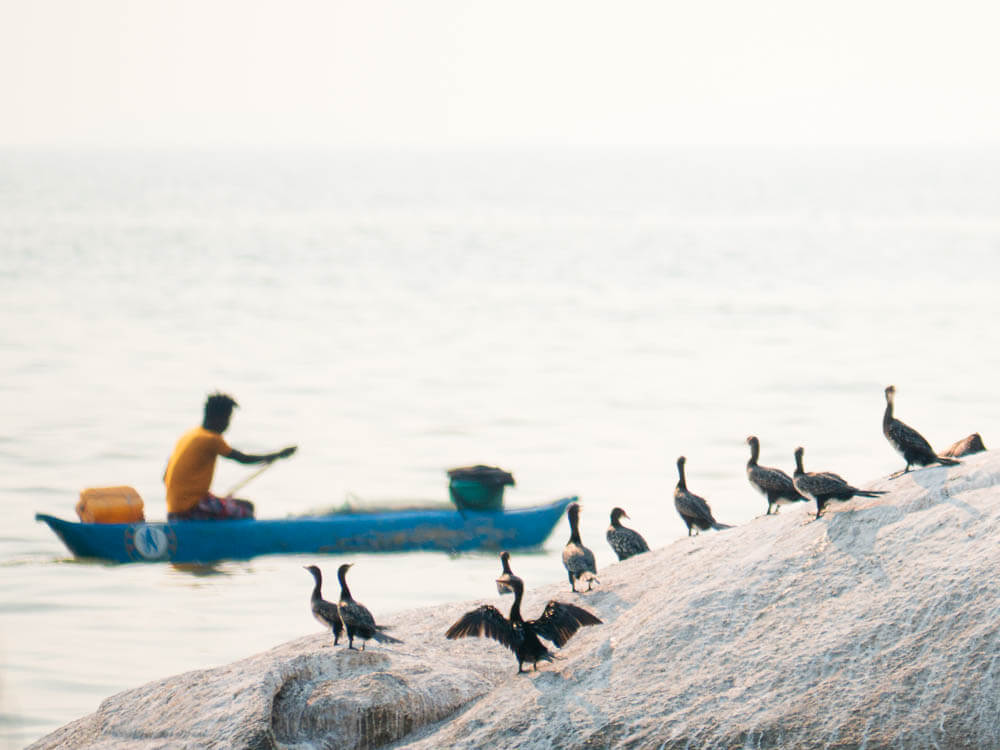
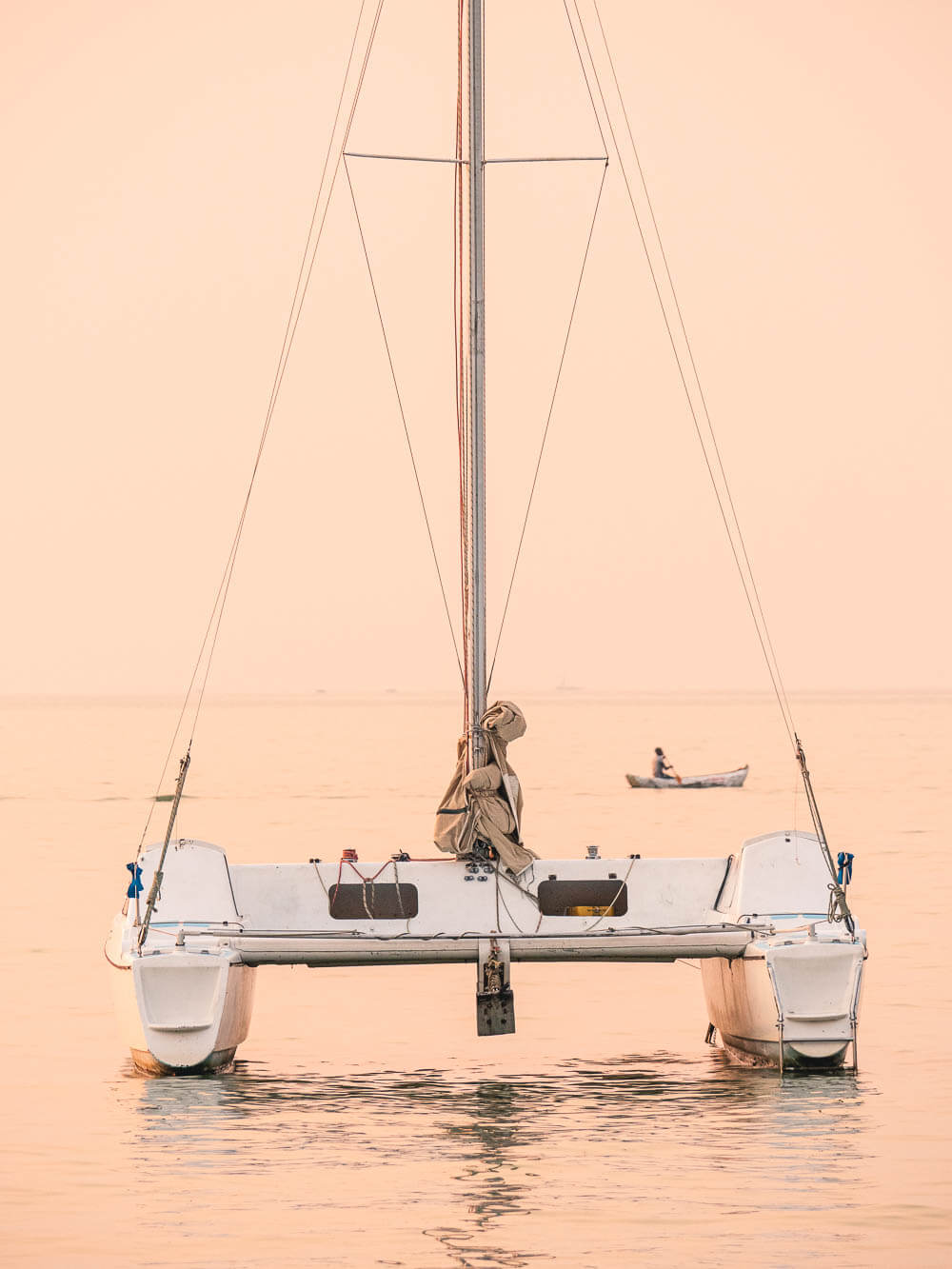
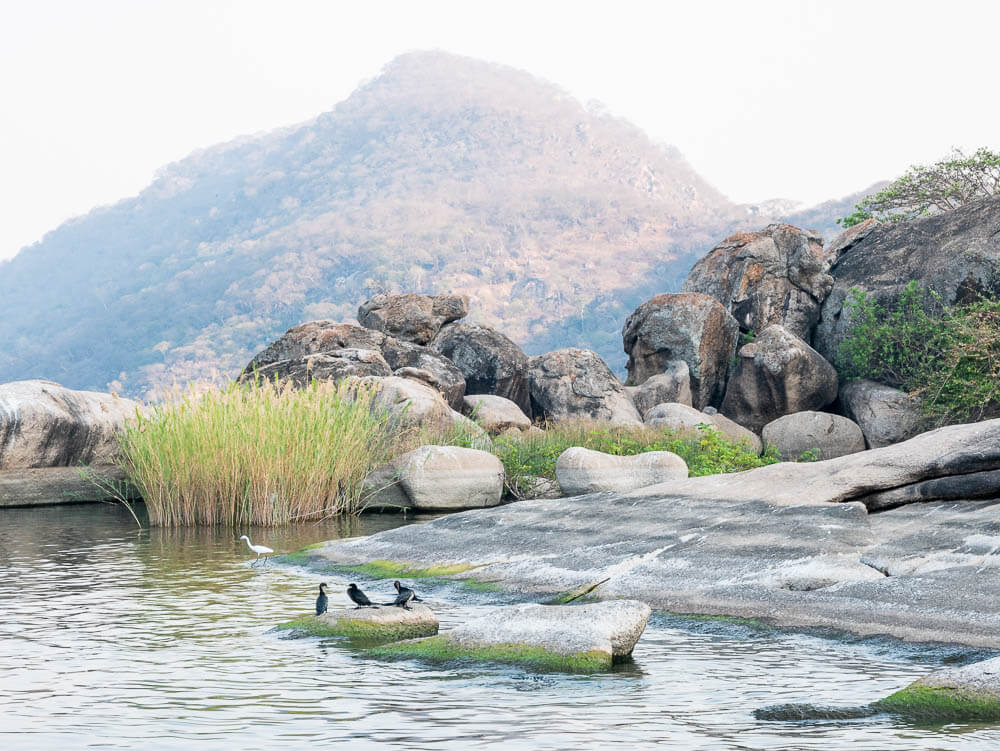
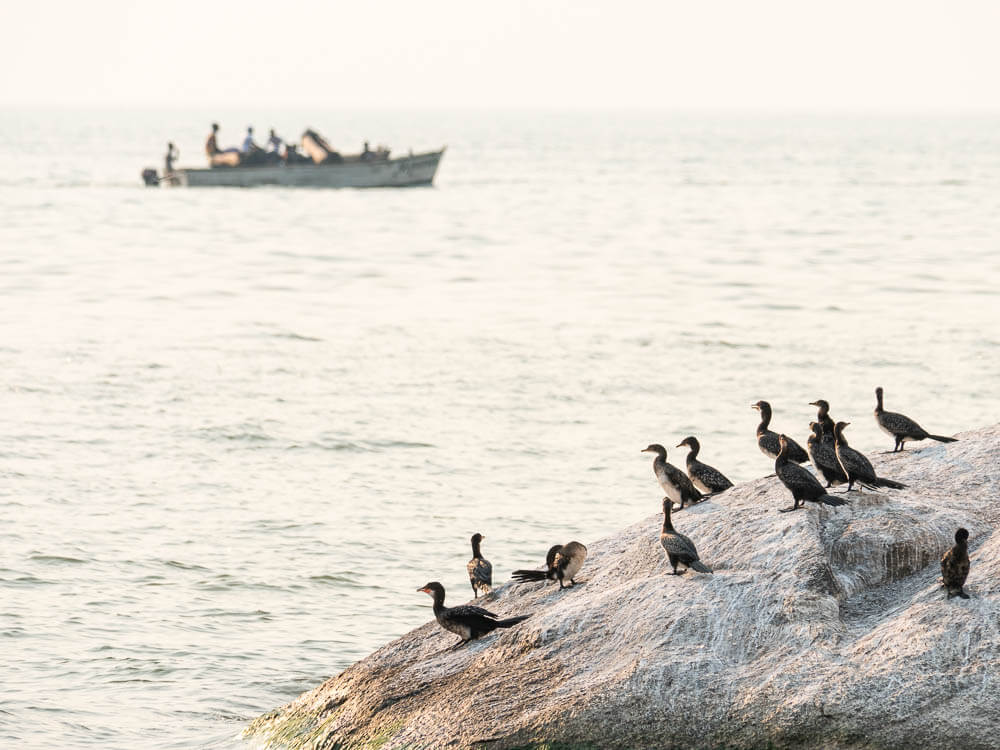
We quickly grab a spot in the campsite almost on the beach and settle in for a chilled-out week. The sunsets over Lake Malawi on the first two evenings are incredible. Fishermen in their proud boats chug along on the smooth waters sending ripples through the colours of sunset. Fish eagles, cormorants and hammerkops fly lazily over the scene.
Along with the campsite there is a pool, restaurant and bar if you feel like it otherwise a campfire at your camp pitch is easy to do. Domwe Island is just a little further north and accessible through hiking and a dip in the water. Most of the Cape Maclear area is national park and day visitor fees are payable per person. If you go for a hike over to one of the islands it is possible that a game ranger type person might ask you for a receipt otherwise money.
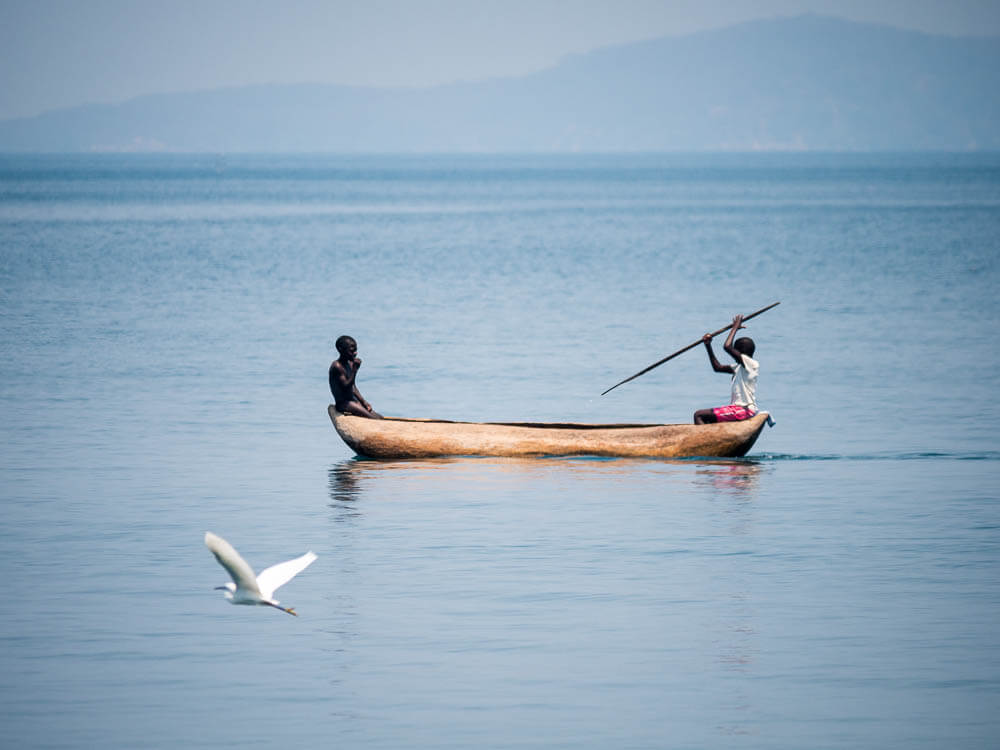
We opt to go on a dive early on so that we can learn about the area through a guided experience. If we understand the locations of some of the dive sites, etc. we might be able to get some good snorkelling in later. After some research, we book in with Cape Maclear Scuba.
Neither of us has dived fresh water before and we’re a little nervous! Our dive master, Freddi, however is excellent and we soon lose the nervousness and gain the excitement. Freddi is a local person who went to the school on the edge of the village in early years.
The only differences I notice between fresh water and salt water diving is that you wear fewer weights on your belt and you don’t need to freak out so much about rinsing your gear at the end of the dive. Freddi assures us also that the chances of running into a crocodile in this region is minimal and manageable if it does happen.
We are the only people on the dive for the day. It turns out this is not unusual these days (October 2022) because of the impact of Covid on the tourism industry as well as the impact of Tropical Storm Anna on the infrastructure of southern Malawi. Anna hit southern Africa in January 2022 and caused significant damage to Madagascar, Mozambique and Malawi. Tens of thousands of houses were destroyed and hundreds of thousands had to move into refugee facilities.
Malawi has a hydroelectric plant, Kapichira Hydroelectric Power Station, which used to produce around 30 percent of Malawi’s electricity needs. The power station runs off of the Shire River just south of Lake Malawi. The power station had to be taken completely off-line due to Anna storm damage and is only likely to be back on-line in 2024. A lot of activity in Malawi now needs to run off of private generators which is much more expensive and many inhabitants and tourism operators are struggling. The double-whammy of a once in a century pandemic along with a once in a generation storm has been almost too much for many in the region to manage.
Freddi, however, with all of the woes of the region, is extremely professional, knowledgeable, interesting and interested in talking to us. We tell him about the Covid lock-downs in the first world while he tells us about Malawi.
Our two dives are well guided. We’re interested in getting the feel for deep freshwater lake diving and of course want to see the famed cichlids of Lake Malawi. Cichlids are a very large family of fish found around the world but there are around 850 species of this fish family living in Lake Malawi. Potentially more, potentially less. No-one has been able to classify all of them yet. There are so many different types of cichlid that it is said that some varieties can uniquely exist to a stretch of only a few hundred metres of Lake Malawi. I’m not sure how true that ‘fact’ is though.
The first dive is easy with no ocean current to worry about. Visibility is good but can apparently get much better depending on the weather and the season. We still have about 15 metres of visibility by my reckoning. Our maximum dive depth, from memory, is about 25 metres. I don’t notice a major difference in my buoyancy control between salt and fresh water. The feeling of diving Lake Malawi is phenomenal! The huge granite boulders drop down quickly creating a similiar feeling to diving an ocean shelf. The boulders also create fun swim-throughs and big nooks and cranny’s to search in.
Divemaster Freddi clinks and points ahead. A big fish hovering like a pike almost the same level as us only a few metres away! At first I can’t understand what I’m looking at. A salmon? A coelacanth? Ahh! It’s a catfish! In front of us is a kampango (bagrus meridionalis). A very special species of bagrid catfish found only, I believe, in the Malawi Lake system. The dorsal and pectoral fins flame out from the hovering predator and I’m amazed at the sight. I never thought a catfish would look this spectacular in the water. I was expecting a scurrying eel like creature on the floor of the lake. This has none of the characteristics I would expect from a supposed bottom feeder.
We enjoy the kampango and part ways from her after a few minutes of eyeing each other out. We come upon a few more of the same kampango along the dive. The later kampango are all in and amongst the granite boulders waiting patiently for evening when they come out to feed on the cichilds. This might seem mean to the cichlids but many kampango young don’t make it to maturity because of falling prey to cichlids. Kampango breeding can be quite difficult with preying cichlids and a brood parasite catfish called bathyclarias nyasensis (more the type of catfish I imagined). Apparently, there are some other cichlids who actually have mutual breeding habits with the kampango. These cichlids will hatch their young near to a kampango hatchery and both sets of parents will spend time chasing away other predatory fish.
Our air on the first dive seems to last forever. Perhaps due to ease of movement through lower density water and zero currents. Our dive master however calls it quits around the appropriate mark as it is starting to get cold, and we slowly drift in along the broken granite cliff enjoying the now emerging cichlids along the way. Our safety stop is spent watching hundreds of different coloured fish darting around us and the rocks.
Our surface interval is spent on Thumbi Island where we relax on the sunny beach and talk to Freddie some more about post-Covid days, where we’re all from and the surrounding area. He gives us some great info on snorkeling spots and kayak trip ideas which is exactly what we were hoping for.
The second dive is shallower at a well-known site called Aquarium. The deepest we went was about 15 metres and it was primarily in and around a large section of granite surrounded by fine sand. The sand floor has cichlid nests rising like volcanic craters. The detailed and uniform design is quite spectacular. A perfectly formed cone with a trough in the middle. The male cichlid uses his jaws to work the sand into place and the female selects her mate based on the male’s jaw and his sandcastle building ability.
In the granite boulders we find another species of cichlid which keeps her brood in her mouth. There are lots of minuscule fish swimming around and the next moment they all disappear into the female’s mouth as she becomes concerned at possible threat. The children are only released when the perceived threat has disappeared.
We swim in and amongst the brightly coloured cichlids for a good long time. The first dive amongst them, it is impossible to begin to identify and order them. You would need to spend days to just start to get a sense of the individuals within the variety.
The end of the dive is sweet from success. We’re glad to have done two dives as they were two very different experiences of a very unique place. We head back to the dive centre, laugh at not having to wash the gear in fresh water (a routine drilled into us from divemaster training days), and head out to our campsite for a campfire and chats.
The rest of the week is spent catching up on hobbies, running in the October heat, kayaking, snorkeling and lazing in the resort pool at sunset. The sun sets directly in front of us over the lake making for superb and sometimes surreal views.
Our resort rents out kayaks and we take one over to a small underwater reef of granite about a kilometre away. We glide through the clear waters learning the cichlids a little more. From our dive experience we were able to figure out a spot away from the national park islands where the daily conservation fee isn’t payable. We chase neon and sky blue cichlids round and round the granite rocks. Some of the cichlids have bright red or yellow fins like brush strokes of oil paint. Other individual cichlids are an impossible gradient of colours. Bright yellow heads to subterranean shining green bodies or orange to banded orange to droplet dappled orange fins flitting away in front and to the side of us. Some of the fish are curious, some swim lazily by and others disappear quickly into crevasses. Hours of fun to be had but we are mindful of the long(ish) kayak back against the wind.
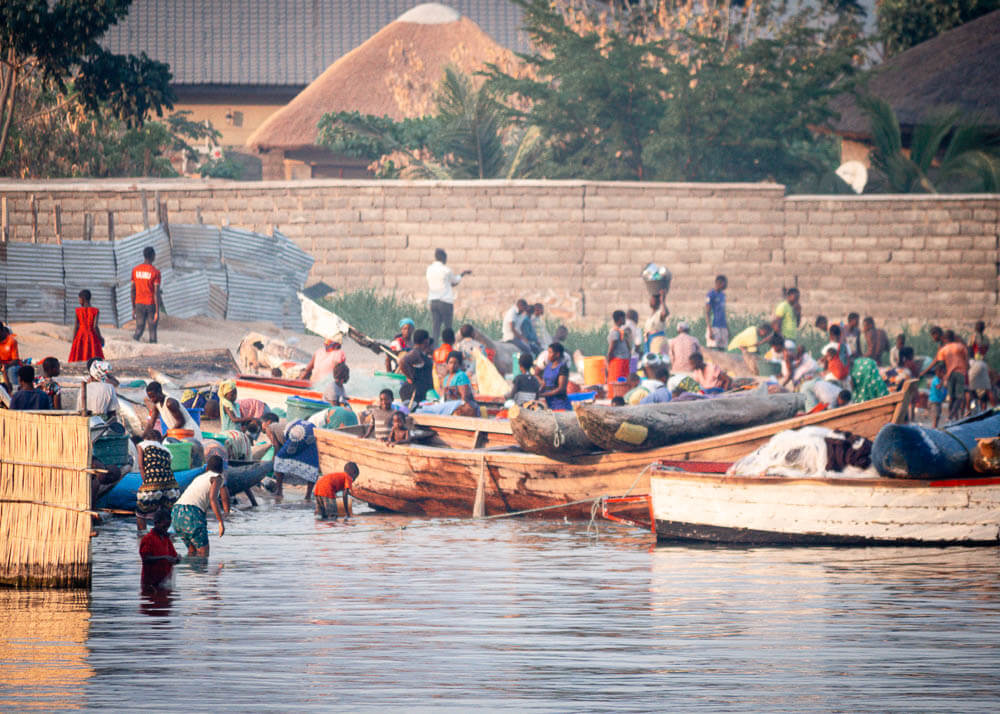
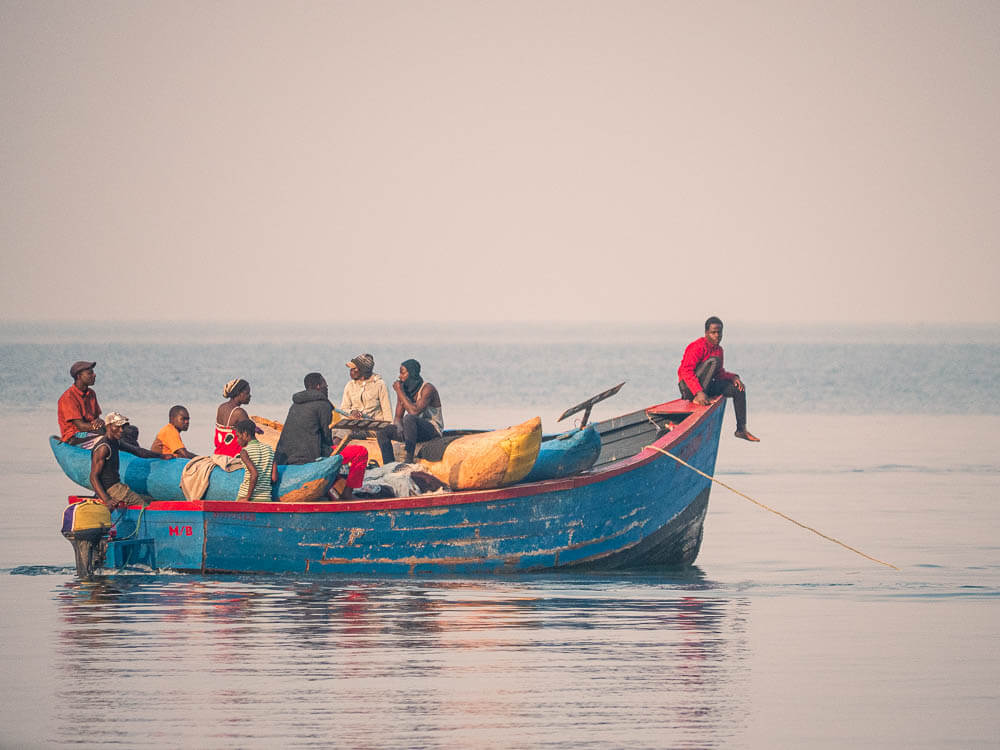
The village of Cape Maclear is a fishing village. A large part of the shoreline is given over to local fishing boats and the fish drying racks. The fishermen primarily catch chambo (mainly four types of tilapia), a local freshwater sardine and the kampango with nets or lines depending on the fish. The smaller fish are caught and then dried and sold in a preserved protein form on to the wider country.
The fishing village is not very big and is spaced more densely closer to the fishing boats and shoreline. On the beach are rows and rows of fish drying racks where the smell of desiccated fish can sometimes be overwhelming. I tried to jog past one of these and had to stop running from lack of oxygen. We are a little nervous to walk through the village at the beginning but quickly overcome our bias and enjoy jogging down the haphazard village road. Small signs of life after Covid exist within the village. A simple butchery cleaves up a goat daily, selling the parts that are available. A small shop sells simple goods like noodles, canned food and proudly displays a few plastic hair accessories for girls and ladies near the counter. Some remnants of the vibe pre-Covid are evident from old restaurant signs and maybe even a music venue. The tourists are gone and it’s going to take a while for this community to recover. There is the fishing but the number of people in sub-saharan Africa is booming while the fish stocks and the lake’s water level are decreasing.
The population expansion in sub-saharan Africa is very concerning for both the people and the natural environment. It is however very important to point out to many non-Africans that this expansion is still well below many developed nations’ numbers based on population by area. Population expansion in sub-saharan Africa will have adverse effects on the natural environment similar to those already wrought in the developed world. China’s population is 149 people per km2. France is 117, UK is 276 and the USA is 35 (about 45 excluding Alaska). England by itself is actually 424 people per km2. Sub-saharan Africa population density is around 50 people per km2. Reduce the available land in the area by a third and that is still only 75 people per km2 in sub-Saharan Africa. Malawi is one of the most densely populated areas next to Uganda especially considering that a lot of Malawi is Lake Malawi.
I provide the figures above to assist in the pitfalls of hypocrisy. When lion and leopard are still available in Africa but no wolf nor bear in Europe the conversation of “the African population issue” seems a little slanted in favour of the wealthier protagonists. That said, there is a big leap in the sub-saharan Africa population happening right now. The population is expected to almost double by 2050. Soon the area will be as densely populated as France! Massive investment in urban African environments, agriculture, skills training and conservation will be desperately needed otherwise the lion and leopard will very easily go the way of the wolf and the bear.
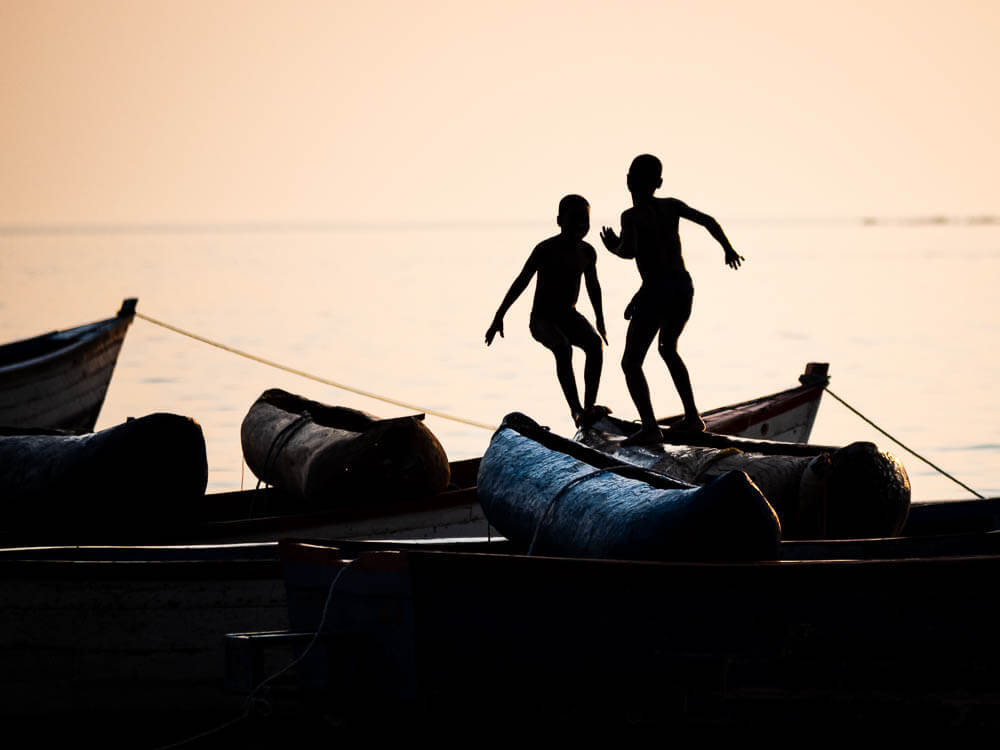
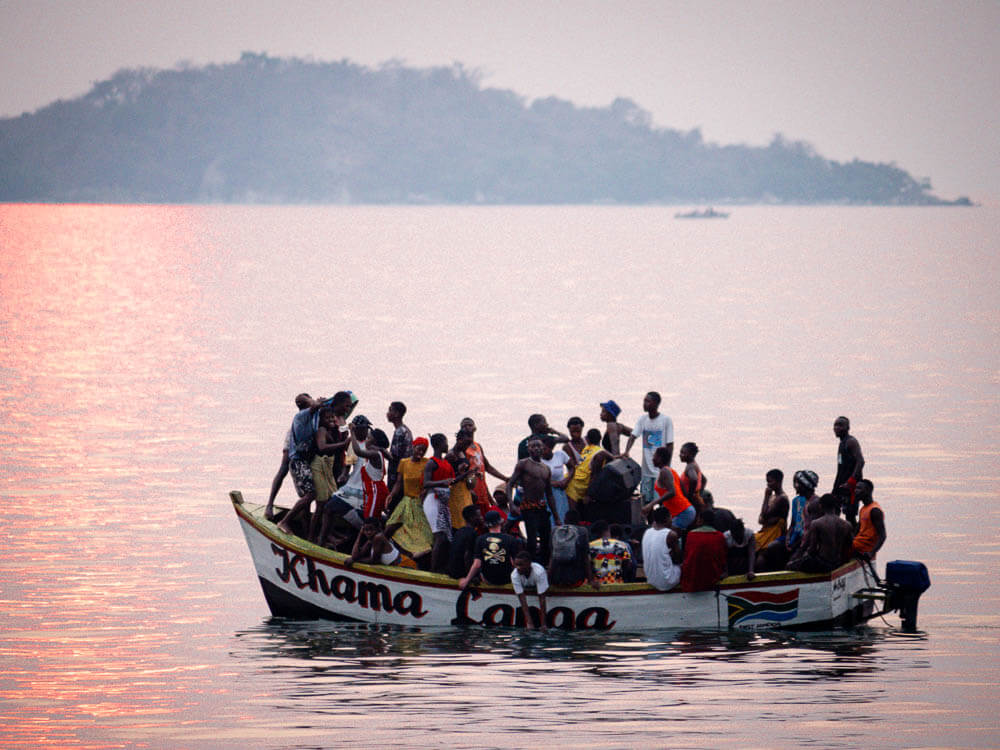
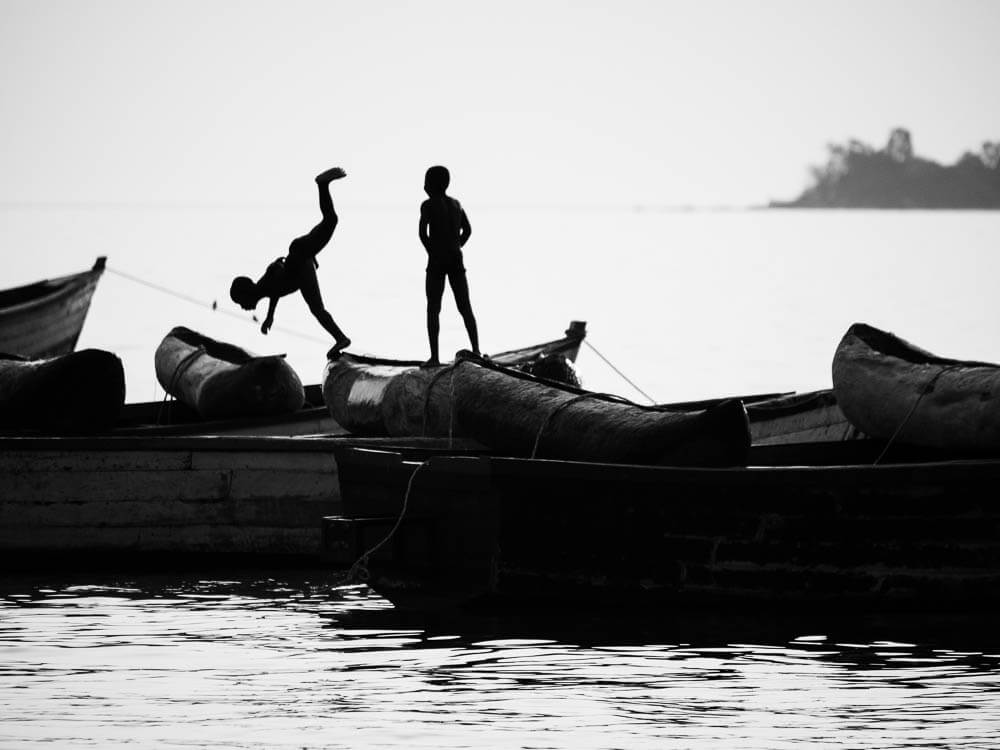
The lives of some of the children on the shores of Lake Malawi are, in the late afternoon at least, still carefree. Children gambol about in the waters of the lake. They practice back flips from the boats and swim over and underneath one another. The evening party-boat goes by in the distance. There are one or two ‘party-boats’ which are for a special occasion for some young person who has recently graduated, had a birthday or even just married. The party boat does a celebratory tour of the shoreline down to Monkey Bay and back with friends of families of the celebrant. The music belts out, and the party goers dance with abandon. It is good to see pure joy like this.
Fish eagles fly overhead whilst we lazily contemplate our next adventure in Malawi.


Leave a comment