
Maun to Khwai, September 2022
From Maun we drive along a wide sandy road with the occasional overlander or supply truck bumping by. After a relaxed journey over the kalahari sands we finally stop for the night at a nondescript little camp in the middle of nowhere.
The camp is just north of Sankuyo village. Sankuyo is predominantly host to the Bayei San people, one of the three major San peoples of the area. We arrive without a booking and bounce through the dry bush following scant signage until the track we are driving becomes a single path. After a few dead ends and returns we come upon some cleared spaces under large trees and a semi-permanent tent structure which later turns out to be a well managed ablution.
Shortly, a man comes walking out of the bush and we agree to a price for the night. It turns out that there is no hot water because an elephant ripped out the donkey boiler the night before.
We ask the man if there are any dangerous animals to watch out for. He shakes his head. That night we are visited by one of the largest hyena I have ever seen. It turns out that the tree we are camping under is also one of the favourites of the branch picking elephants of the area. I suppose a full life in the Okavango Delta gives a local person a different take on what constitutes danger. Make mental note next time to ask whether we should expect any animals rather than any “dangerous” animals.
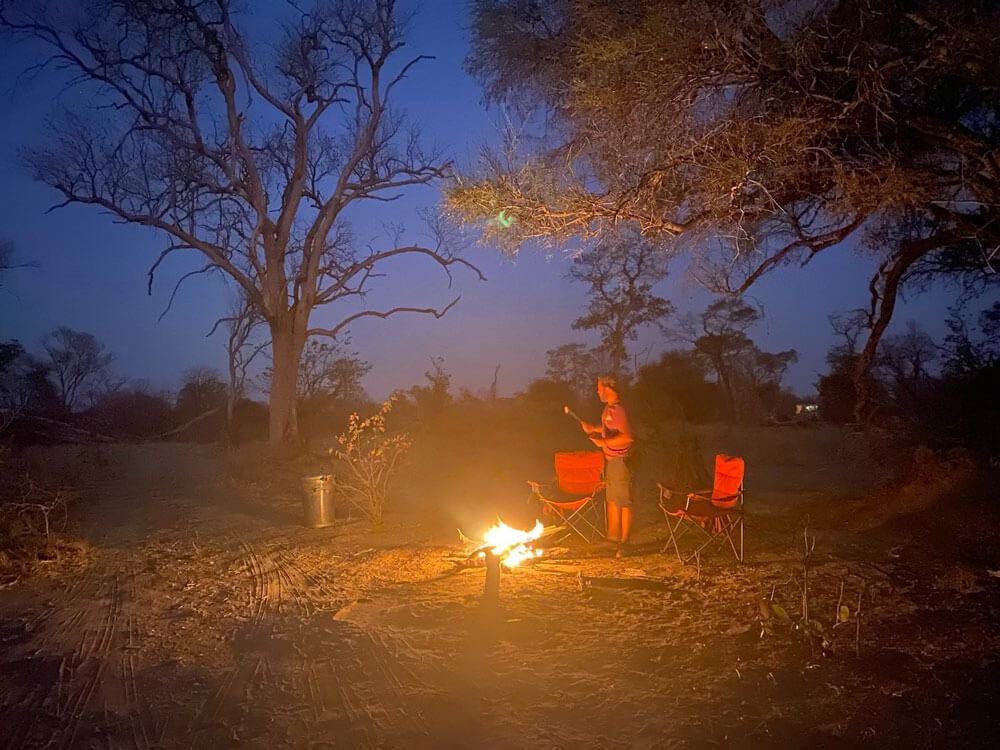
The following day we take note of the huge hyena footprints in the sand and then head off towards Khwai. We pass a small village called Mababe which is the second of the local Okavango San people’s primary settlement areas. The Ts’exa are reported, via oral tradition, to be the first of all of the inhabitants of this northern Okavango area. The Bayei and Babukakhwae San peoples say that they found the Ts’exa here and that “they were the first”. In which migration or move this first was counted is unknown from the little that I have read and understand.
Research on this area of the Okavango and the surrounding peoples has been the most difficult of my Africa research attempts to date. An area of oral traditions and misted movements over African savannah and marshlands. I apologise if anyone with a much fuller knowledge notes any mistakes I might have made.
Our road turns out to be merely transient and just before Mababe village we find a large lake of flooded Delta barring our way. On backtracking we find a detour around. We have to ramp sandy hills to make way for a few passing trucks, overlanders and two uni-mogs who want to use the detour coming from the other end.
We stop briefly on the Mababe river tendril which seems to mix haphazardly with the Khwai river after passing over an old steel bridge with an even older bridge next to it.
On leaving the Mababe village we find a sign indicating that we have to call in at the Khwai community village if we want to stay at one of their campsites. There are five accessible and non-luxury campsites available as far as we are aware but ownership and accessibility is confusing based on online information. Mbudi Campsite, Khwai Safari Grounds, Khwai Campsite number ten and Magotho Camp are what we think of as community camps but have since noted that only Magotho is labeled as a community managed camp.
We drive all the way to the Khwai community centre and are a little miffed when the man in charge tells us that the sign isn’t valid anymore and that we can just book in and pay directly at the campsite. It is however nice to see the Khwai village, the third and final of the settlements for the Okavango San peoples. The drive in gives us a chance to stop at a schwanky small green building which advertises and delivers on the promise of filter coffee, cold cold drinks as well as the best russian and chips of the adventure to date. The entrepreneur at the green house is also extremely savvy on exchange rates with a mark up of about 30 percent on foreign paper currency raising the ire of some large foreigners desperate for an ice cold coca-cola but not carrying any Botswanan Pula currency with them.
Desperation is an overweight American on the edge of the Kalahari with nothing smaller than a 20 dollar note.
We leave Khwai village satiated by russian and chips and cold drinks. We each have a filter coffee bouncing and splashing as we head towards our first stop Mbudi camp.
Between Moremi National Park and Savuti-Chobe National Park is the Khwai community development trust lands. It is an area of land of about 1800 square kilometres. It is technically larger than the Masai Mara in Kenya but 85 percent of the northern region is mopani woodland which offer reduced game viewing opportunities. A pristine area of 185 square kilometers, area NG19, is managed directly by the Khwai community while the rest (NG18) is managed by private operators on a concession basis.
The local people of the Khwai village are, as previously mentioned, predominantly a subset of the San people of this area and are called Babukakhwae. This primary settlement of the Babukakhwae has around four hundred people living in a small part of the large trust lands and this small village is called Khwai to most. The name Khwai is synonymous with a larger area of land that the Babukakhwae used to travel through seasonally hundreds and thousands of years ago. The three main subsets of the ancient San people in the larger Okavango and Chobe area are known to have hunted, roamed and lived throughout the wider area. These San people are understood to have inhabited this land as far back as one hundred and fourty thousand years ago after their ancestors traveled south from central and eastern Africa (as per apparent current research).
Mbudi campsite is exactly what we were hoping for. We have now arrived in the Okavango Delta! After turning off onto a sandy track we come upon a green area with acacia and leadwood trees hanging over an engorged Khwai river. A large bull elephant is busily pulling and munching branches from one of the green leafed trees along the river bank while local guides punt a handful of fascinated tourists up the river’s course. The makoro boats skim over the reflective water’s surface skirting around puffing hippo only a few metres away.
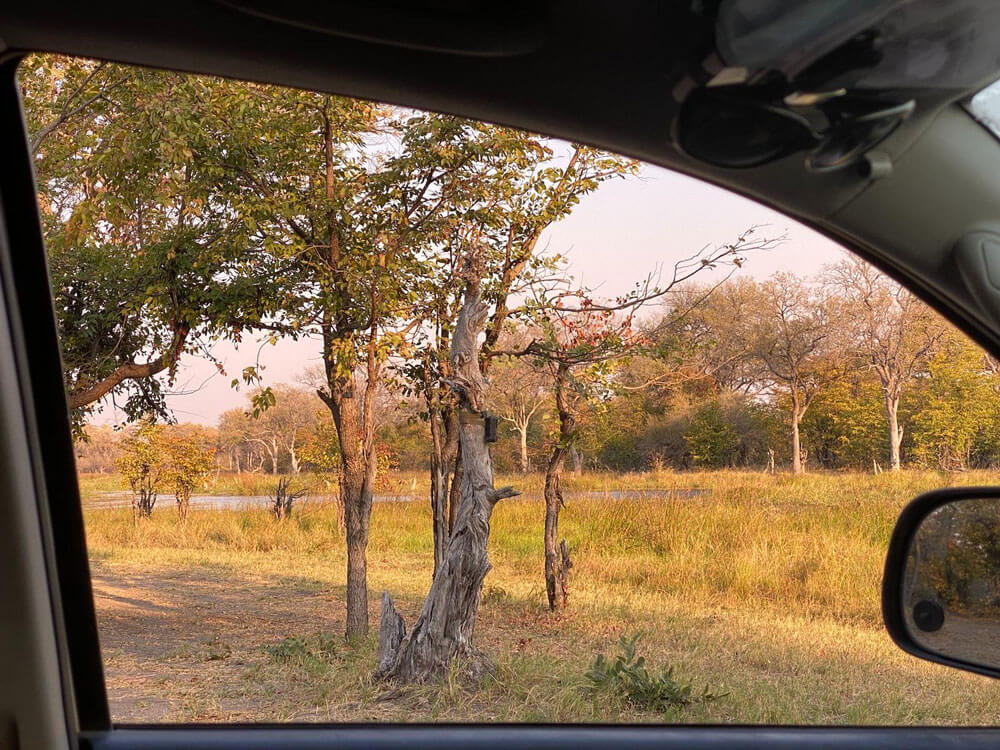
After a quick chat with the camp manager we are set up with a campsite alongside the river bank. On arrival we watch a large hippo walk past us over a grassy sand bar. Water buck and lechwe step through the wet grass and on to the water’s edge. We are so excited by the sights we decide to stay in the hilux cab section for the night instead of sleeping in the roof top tent. The plan is to sleep with the front seats reclined. This way we will be able to watch everything around us with a 180 degree view.
The Khwai River is a direct beneficiary of the Okavango Delta and sits on the northern edges of the seasonal flood. This means that the Khwai River begins to fill from August onwards and reaches its peak in October. The rains then begin the following months dispersing the game concentrated on the Okavango Delta rivers and rivulets.
We spend the night in our double cab hilux looking straight out on to the Khwai River. A large hyena visits our campsite looking for any tasty morsels in the late evening. A few hippo meander by in the river and the lechwe and waterbuck tuck themselves well within some low hanging tree branches and shrubs out of the way of lurking predators.
A mostly uneventful but still exciting night spent in the double cab. Comfortable enough to do in the future if needs be. In fact, we decide to do it again the following night to test whether the novelty wears off. We want to see whether we could do it for a few days on end if in unknown or potentially dangerous areas.
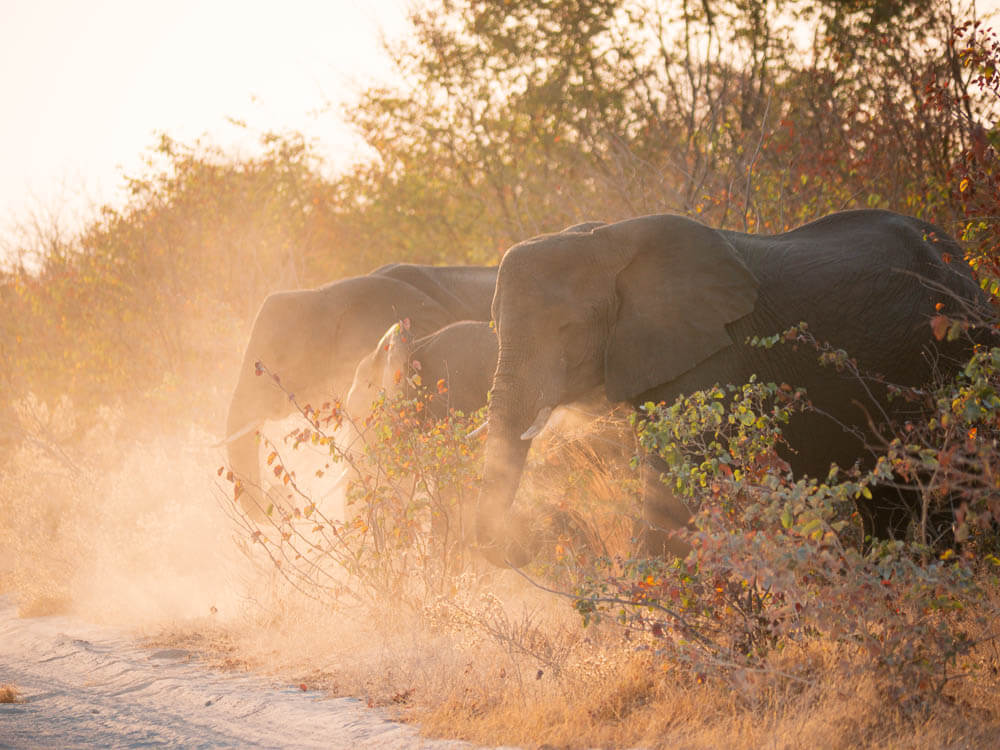
Our next stop is Magotho Camp which is south of Mbudi and nearer to the Mbabe Gate into Chobe National Park.
The wildlife designated areas nearby are Moremi Game Reserve and Chobe National Park. Moremi was designated a game reserve instead of a national park to enable the continuation of the San peoples’ traditional area of habitation but there is some uncertainty on my side regarding the true access of the local peoples to the game reserve lands. It is understood that the Babukakhwae were asked to settle in modern day Khwai village in the 1960’s.
As of the year 2000, a new community led initiative was started. Tourism was moved to as a means for the community as a whole to develop and earn a living. Prior to this, and reportedly, subsistence fishing, grass thatching and basket weaving were the primary sources of activity for the people of the Khwai community. Three campsites managed by the Khwai community were created and concessions previously given over to hunting were bid for by local safari operations.
Some interesting reading on the Khwai area can be found here.
The luxury accommodations in NG19 private reserve are also on prime river frontage and similiar in sights and experience to the community managed area with the only added benefit being five star service.
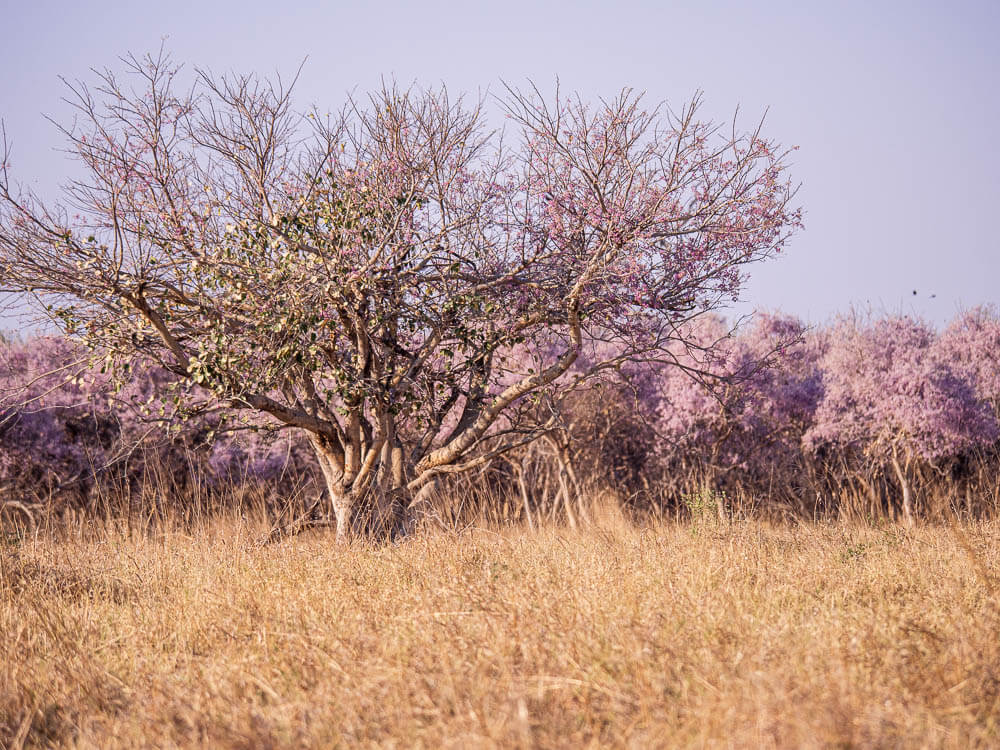
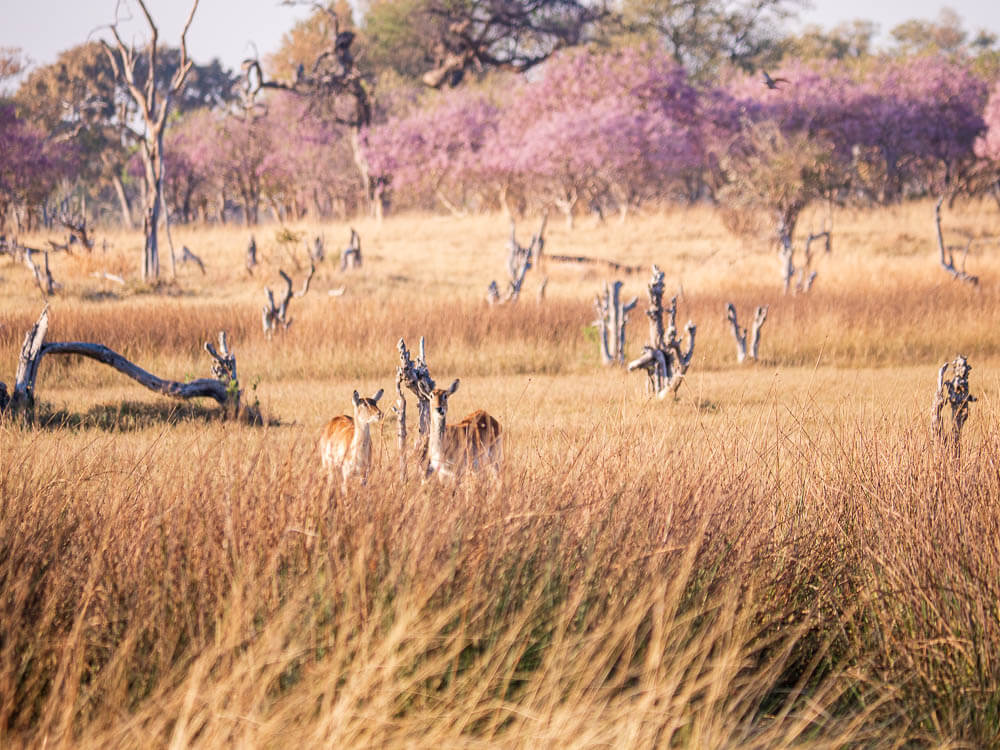
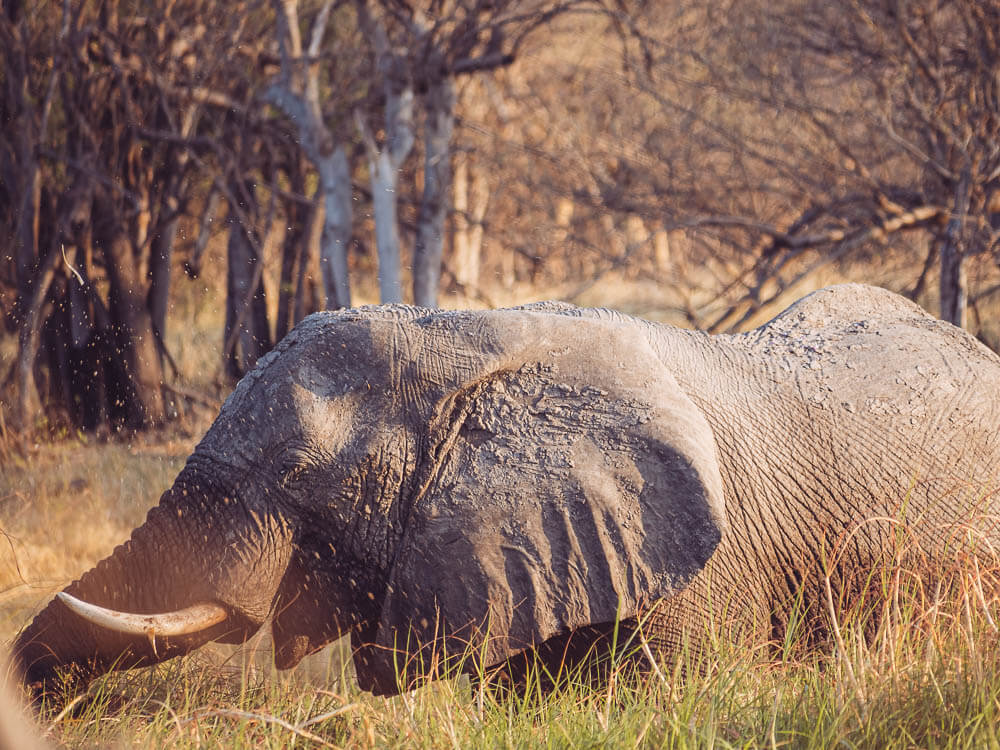
The zero star service Mbudi camp is spectacular and on a tree lined tentacle of the Okavango Delta. Magotho camp further south, again zero star, is a whole new area with large swathes of grassland broken up by clumps of large trees, the Khwai river and the outer marshes of the Okavango Delta. It is September and the Kalahari Apple Leaf trees are flowering in a violet haze. There is a maze of kalahari sand tracks leading haphazardly through the grasses often ending abruptly in some seasonal marshland with an elephant, hippo or crocodile blinking incuriously at you. Red lechwe, water buck, giraffe and all of the other African favourites rest in serenity in one of the most special and unique places on the planet. Again we wondered at how lucky we were to get to see another spectacular corner of the world.
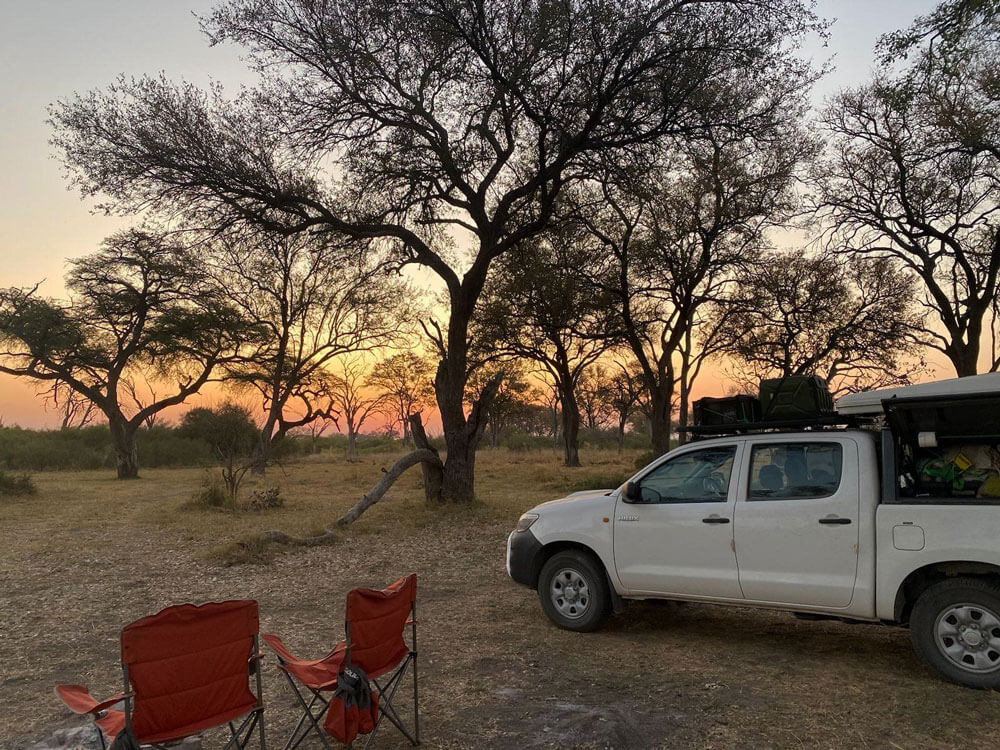
We spend the night once again in the double cab front seats looking out keenly for a roving pride of lion or a sneaky leopard in the night but with no luck. In the morning we do a quick game drive and come upon tracks laid in the night by a large male lion. The lion walked by the campsite area about 500 metres from us. Reports on this camp are that lion are very regular night visitors.
We sadly bid farewell to the delta and take the road north towards Savuti and then Kasane.
 The Colour of Travel
Leave a comment