
Dar es Salaam to Tanga, August 2023
We bid a sad farewell to our hosts at Joleen Safari Park and head north once again. A few stops along the way up to ascertain future options. One resort will allow long-term parking if we decide to head for Zanzibar. The options are mostly beach town resorts with adequate beach front, adequate restaurants, green swimming pools and adequate pricing. We keep on moving in search of something less adequate.
The decision is made to drive through Dar es Salaam on the way to Bagamoyo. Soon after crossing Nyerere Bridge we almost get taken out by a city driver. Closest miss of the trip. We take a left when we should have stayed on the main road and end up having to use the 4×4 abilities of the Hilux to cross over a kerb back onto a road going somewhere. Dar es Salaam central is big but not monumentally so. Obvious signs of a city built over hundreds of years are evident through the winding streets and the sprawl of the buildings, markets and high rises.
Dar, as the Tanzanians call the city, is the previous capital of Tanzania. Tanzania’s federal capital was changed to Dodoma officially and completely through the political will of Presidents Magufuli (2021) and President Hassan (Current 2023) with one last herculean punt after having had the move delayed by over 50 years since the referendum based decision was taken by then President Nyerere. The new State House building in Dodoma housing the presidential offices and the official residence of the president was officially opened on 20th May 2023. The move of the capital to centrally located Dodoma is intended to increase equality in access to resources and political power for the people of Tanzania. It is also intended to reduce costs through geographic centralisation as well as lighten the load on Dar which is straining under the weight of population increase. Dar es Salaam is still the commercial and maritime capital of Tanzania.
We drive past the Magafuli Bus Station, an aesthetically pleasing and very large building which brings exclamations of surprise from both of us. The bus station is reported to be able to handle 3,000 buses daily. The station began operation in November 2020 and was inaugurated by President Magufuli on 24th February 2021 only a few weeks before his death from either atrial fibrillation or a Covid 19 infection depending on the conjecturing source.
Old and stately hotels stand alongside glazed and mirrored offices and apartments. Newly built districts line the coastal stretch north of the city. We stop in at a travellers’ favourite, Shopper’s Plaza, and gaze at the ridiculously priced western goods leaving with only a few supplies for our trip up to Bagamoyo.
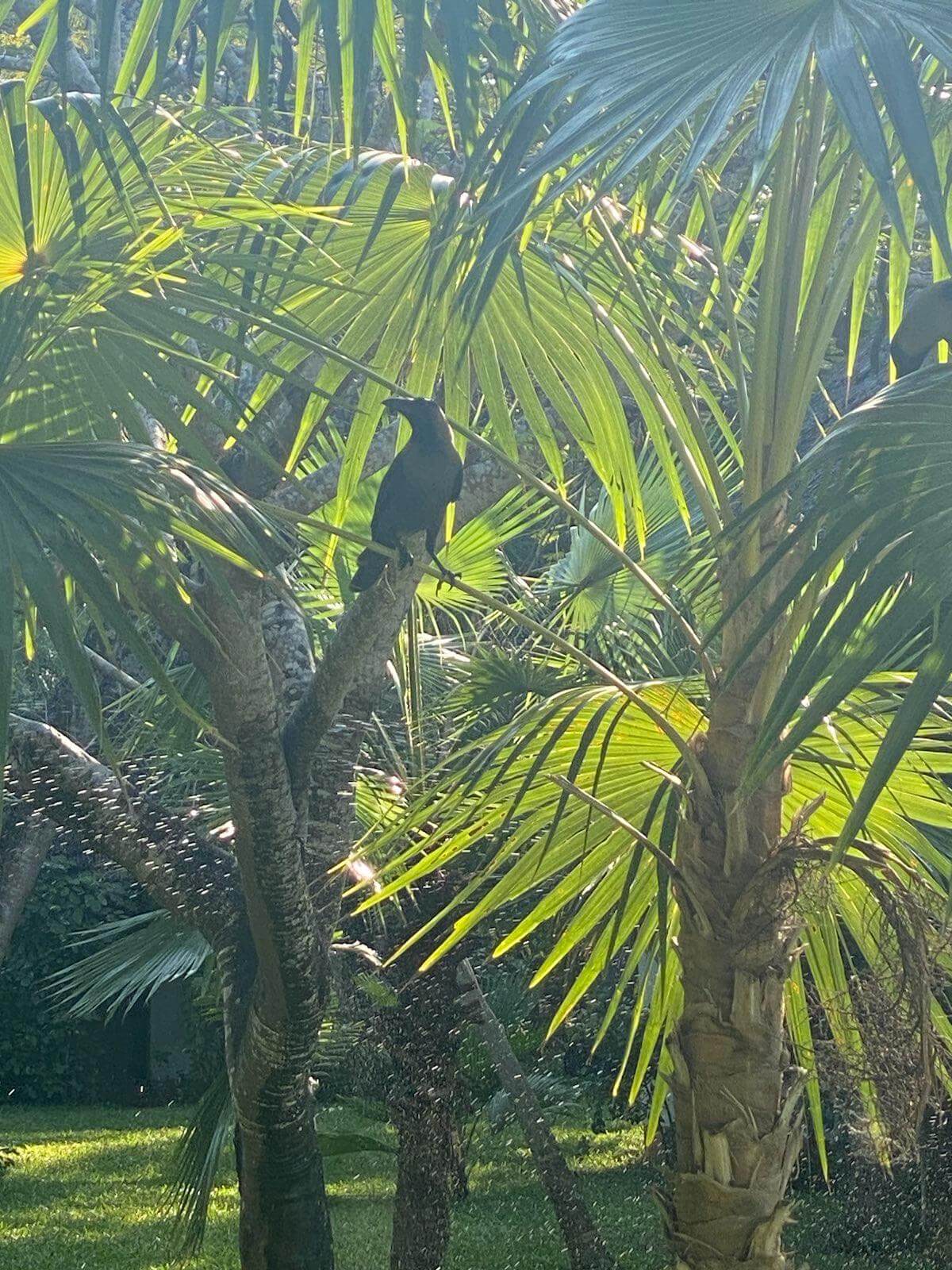
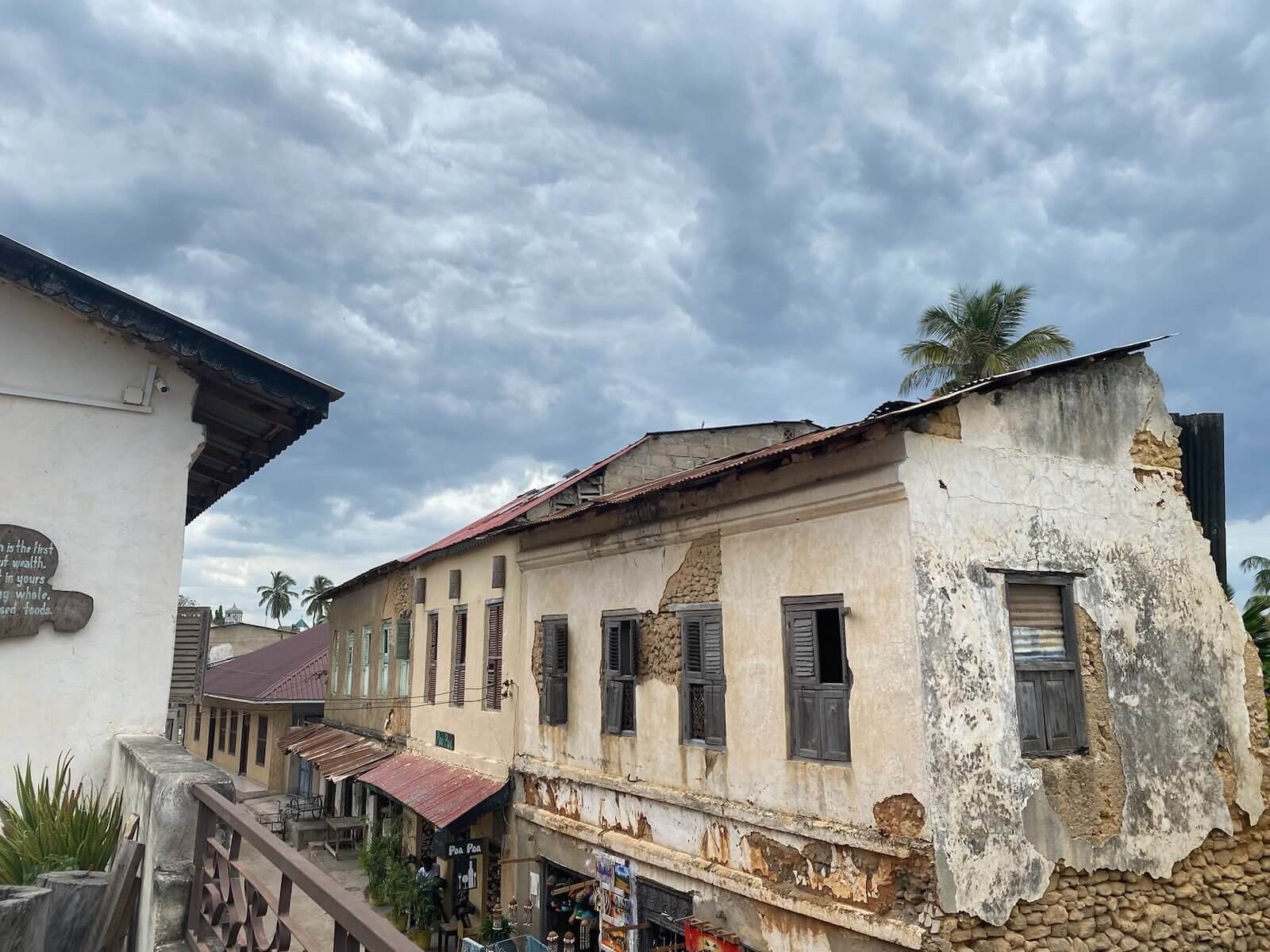
Accommodation for budget campers, including some security for the hilux, has been difficult to come by since nearing Dar. We have heard of only a few options in Bagamoyo and so are happy on arriving at Traveller’s Lodge to find an awesome campsite with owners and management willing to charge budget overlander prices. The Traveller’s Lodge was opened by the German owner 30 years ago and in that time he has cultivated a large variety of palm trees in the surrounding green and manicured gardens.


We park up near a large tree under the shade and cook our own food while enjoying a few beers under the East African coastline stars.
For the next few days, we pass the time simply by going for morning jogs along the bustling Bagamoyo beach. The rest of each day is spent wandering around Bagamoyo town, eating local meals and catching up on travel diaries.
Our jogs along the Bagamoyo beach begin in the morning with the sun hanging over the ocean. A rippled path of sunlight leads to the horizon with the dhows of local fishermen sailing by. Every morning there are artisans on the beach building dug-out sail boats and hulls for slightly larger dhow varieties. The hull skeletons are made by lining v-shaped tree limbs in a row parallel to one another. Much of the hull making operations are achieved using the machete. We have to hop over the anchor lines of the hundreds of dhows still tied to shore. Each rope line, sometimes a hundred metres long, stretches from the top of the beach to the floating dhow on the ocean. We entertain some of the fishermen and other community by tripping or being grazed by a rope-line once or twice each jog.
We run past the Bagamoyo fish market each day. Rows of concrete tables with all varieties of seafood are on display. Following that the old Bagamoyo customs house and then the small port servicing the larger transport dhows. Trucks line up every morning at the small port to deliver long trunks of timber to be transported to Zanzibar or further down the coastline.
We walk back along the old main road turning right at the Old German Fort ruins. There are a few artist showrooms along the way and a restaurant or two with new tastes to find. A strange little shop along the way is the best find. A polite man owns a brick building in front of a garden of chilli plants. Inside the small shop are shelves and lines of chilli sauces and chilli seed packets. We pick up a few packets of peri peri chili seeds for a future, yet unknown garden.
Like a lot of the other towns and villages in Tanzania, there is a definite mix of both Islam and Christianity. The local mullah call out in the early morning starting even before the roosters crow. In Bagamoyo, the Christian churches seem to have taken on the schedules of their Abrahamic brethren and also begin the mornings with loud voices in worship. Whilst we sleep well here, we definitely don’t get to sleep in.
We enjoy a few days of rest camping in the green grounds of the palm tree garden and pull ourselves away only with difficulty.
Northern Coast Exploration
There is more coastline still to explore north of us. The owner of Traveller’s Lodge recommends we travel up through Saadani National Park. The costs for transit of the park are, however, typically East African style pricing, and in short prohibitive. At least a hundred dollars to pass through so, instead, we drive up the A14 and take a left at Mkata heading in towards the coastline just above Saadani National Park. We are booked in at an ideal looking beach spot for the night.
The road from Mkata to the coastline is currently being upgraded in a very significant way. An old rural dirt road is being converted into a what looks like a multi-lane highway. This is part of a multi-million dollar road infrastructure project to connect Bagamoyo in Tanazania to Kilifi up north in Kenya. We drive on the red and clay soil hoping to make it to our camping spot for the night before the rains begin. Almost two thirds of the way there and only a few kilometres after a Chinese worker compound, we come to an impasse. A large digger is doing its thing in a small valley and all of us traffic have to stop for half an hour until the work is done and space can be made for us to pass through.
Construction of this significant arterial route from Bagamoyo – Mkata – Mkwaja Town – Pangani – Tanga and all the way up to north of Mombasa in Kenya was started in 2019 and it is hoped that the major sections will have been completed by 2024. We are driving as best we can to arrive at our campsite before the forecast rains begin, we are here in August ‘23. Rains in East Africa can happen outside of rainy season also as we’re learning.
The bulldozer moves slightly to the left and us, a colourful bus and and another car edge past the yellow machine and climb the clay road towards our campsite and dinner.
Our host sends a motorbike escort at the turn-off from a small village and we arrive at the idyllic beach location an hour or so before the rains begin. I’m a little grumpy as I feel that the campsite manager’s comm’s haven’t been great with regards to the quality of the road from Mkata which I asked about a few days previously. “It’s good” is what I was told but I let my issue go as that cloying clay route that took many more hours than expected is probably better than what used to be there.
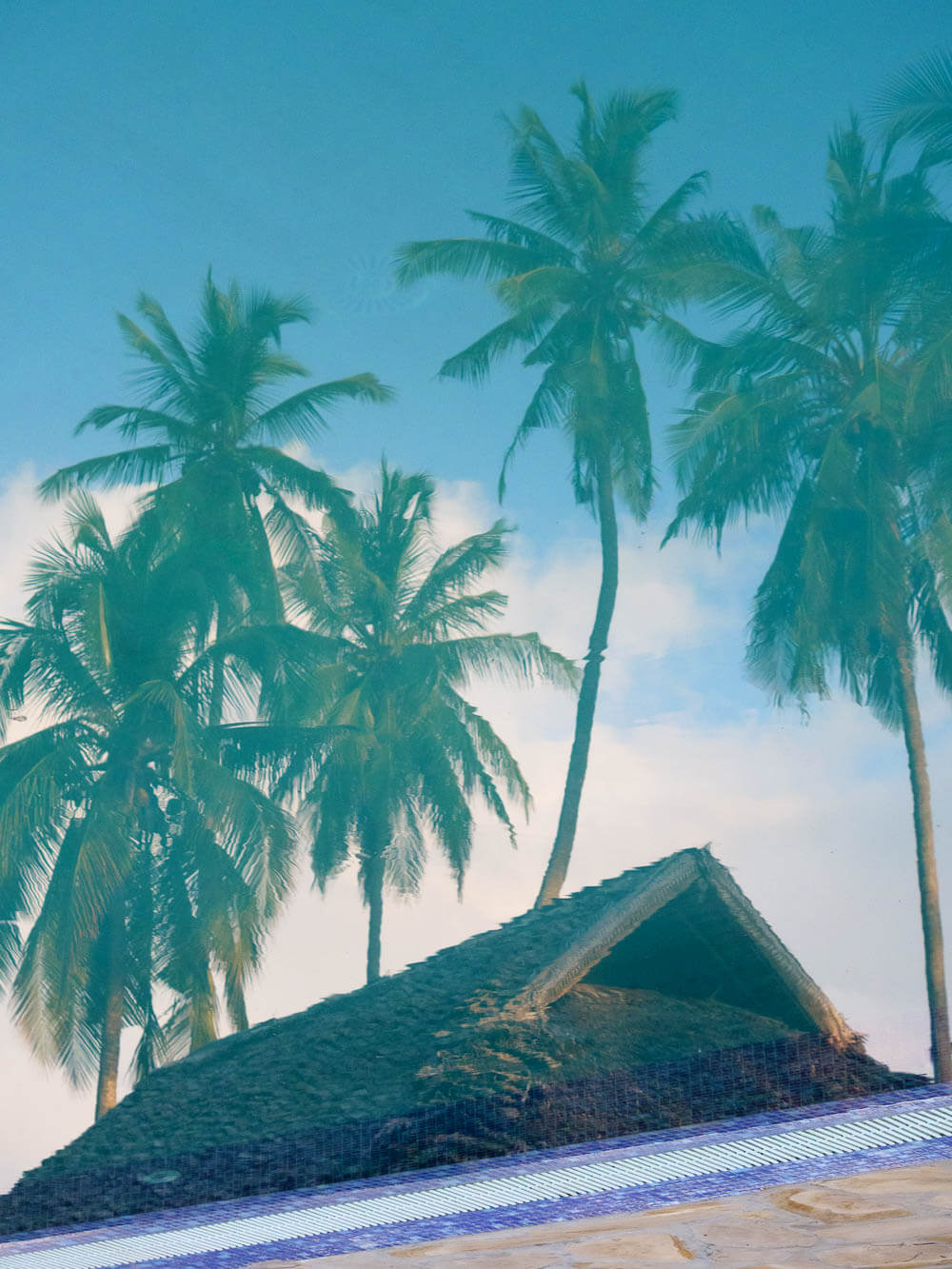
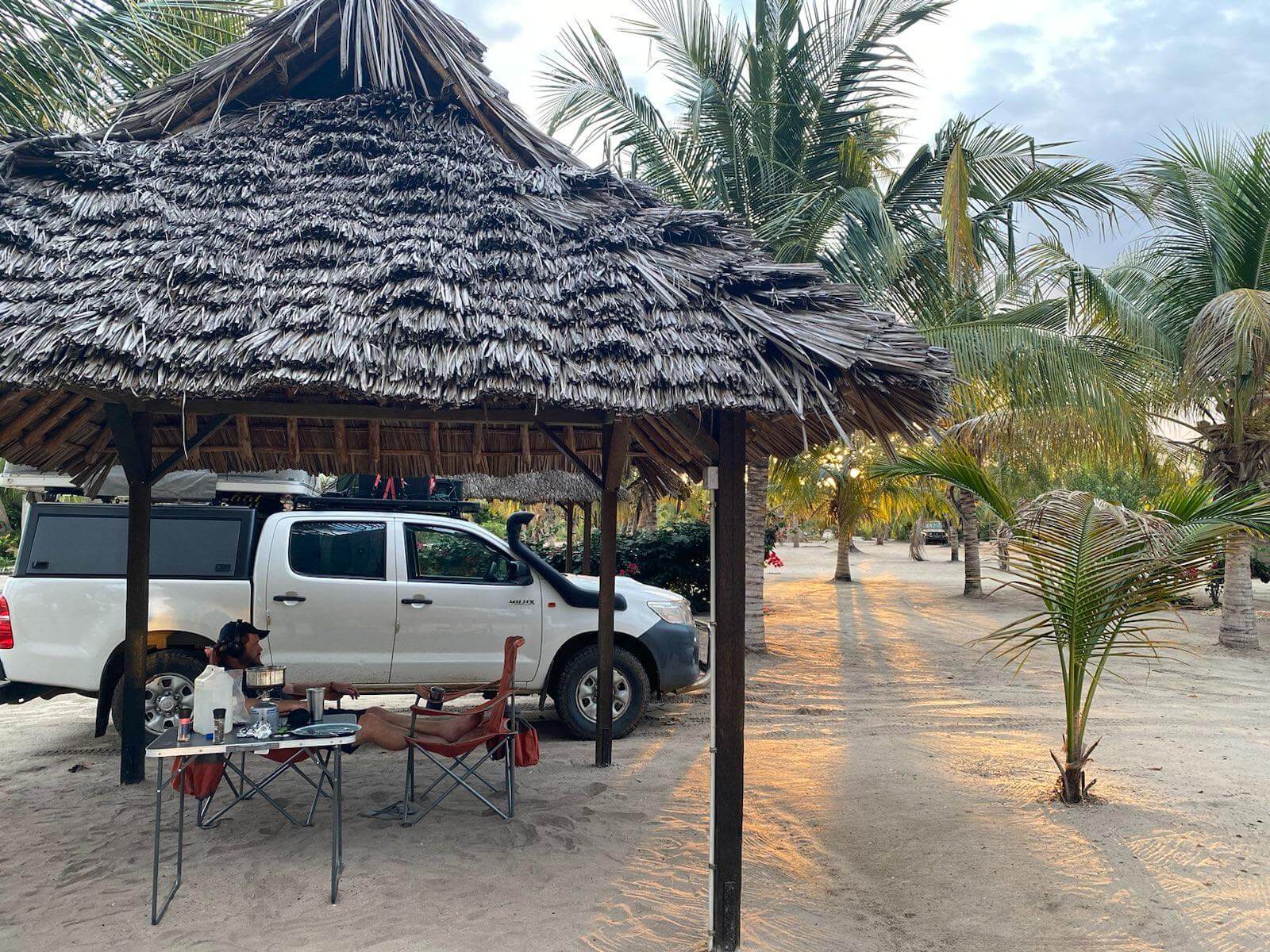
The beach location is idyllic. White sands, no one around for miles and palm trees all around. The rains begin soon after we arrive and it is proper coastal tropics rain. You get a sense that someone turned on a tap for the vertical rain shower to begin and last for hours.



We take out our inReach satphone and get the weather report for the next 48 hours. It’s not looking good. A check on a weak 3G connection also confirms that it’s rains all the way down for the week. It looks like there might be a few hours tomorrow morning and the next day of sunshine but the rain is set in for the week and more. We realise that it will be a little silly to sit here in the deluges not being able to enjoy the beach and so decide to head further north the next day.
The next morning, in the rain, we take a different route out that the beach resort manager says “is fine.” It is anything but fine and one of the more difficult routes we’ve done in our 4×4 on all of our Africa travels. In the rain, we drive past rural homes with local people sheltering in the doorways from the non-stop downpour. The “road” is a ridiculous deposit of clay raised above the surrounding land by almost a metre. They must be planning to turn it into a better road alongside the highway route we’re trying to get to. The Hilux is in low range 4×4 and the rear of the vehicle is slipping from side to side on the clay mud. The route is so difficult that we consider taking a detour through the bush at one point but realise that is the beginning of most “lost” adventure stories. Finally, with the hilux still shunting from side to side, we make it back to the highway under construction.
The highway is a completely different character after the rains which let up as hoped soon after we get back on the main road. The going is more difficult and the clay surface a little more treacherous. The views are however spectacular with the hills, ocean and sky brightened in the after-rain light.
Ferry Crossings & Samoosas
We arrive at our next idyllic beach location and see that the weather report has changed slightly to maybe give us a day or two of sun so we decide to camp here for more than a night and head to Pangani quickly to pick up some supplies.
Pangani is a small coastal town just north of the eponymous Pangani River. The river ends in a wide estuary and is sourced by the runoff waters from both Mount Kilimanjaro and Mount Meru.
There is no other way to cross the Pangani river currently except by ferry. We can see the new bridge under construction further upstream. The new bridge is part of the major highway project we have been witnessing all the way up from Bagamoyo. The ferry crossing is a little nerve racking first time. The ferry looks like it most definitely comes from the 1980’s or earlier but it’s a quick and easy procedure and we’re all loaded on and over the wide river quickly for a very small sum of money.


Pangani town is a mostly undeveloped town with low and small buildings connected by a relatively small section of thin tarred road and the rest by dirt roads. A Roman Catholic church amongst others exist alongside various masjids. A large district hospital is set off to the side of the town and there are a few secondary schools. We try to find the fish market but realise it’s not really the time nor day for it and so end up with milk, a few vegetables and chocolates as supplies for our camping back down south of the river.
The crossing with the ferry is again quick costing very little. It looks like the ferry leaves either bank every 15 minutes. I’m hungry and look to buy a samoosa from one of the street vendor ladies before crossing. Kirsty has health and safety concerns so it is only me on this adventure. I have learnt how to haggle now for my samoosas and offer what I think is fair, something like US$ 30c per samoosa. I get a large amount of change back which I’m surprised at so give the change to the young street vendor lady. On jumping back in the car, I realise that the samoosa is mung bean as opposed to meat hence the large difference in price. It is also one of the best samoosas I have ever had in my life and munch contentedly on 3 of them while my jealous travelling companion looks on.
The spot we have found on the coastline of Tanzania is a half hour drive south of the Pangani estuary. The location is idyllic with white sands, palm trees and very little else around. The “find” on iOverlander however appears to be more of a resort catering to higher end tourists and our campsite turns out to be some fairly inaccessible beach sand next to the resort dive shop. The coastal weather is going to turn to rain again for many days in a day or two and so we realise that the coastal portion of our Tanzania trip has got to end. We change plans again, stay for one night, and then head north to Tanga and beyond.
 The Colour of Travel
Leave a comment