Tete to Inhassoro, October 2022
Potholes and Forests
On this trip in 2022 we want to explore more of northern and central Mozambique but the recent insurgent attacks have been extremely violent. We are generally pretty risk averse travellers, so sadly decide to skip the north, including Gorongosa National Park and Beira, and head down to Inhassoro. There is apparently one route only down to Inhassoro via the N1 after Chimoio and Inchope. Google maps however suggests another route along the western border with Zimbabwe for a while. The turn-off is just before Chimoio and then joins the N1 about 150 kilometers later. After a few messages to some people in the know we decide this other western route might be a go and a bit of an adventure.
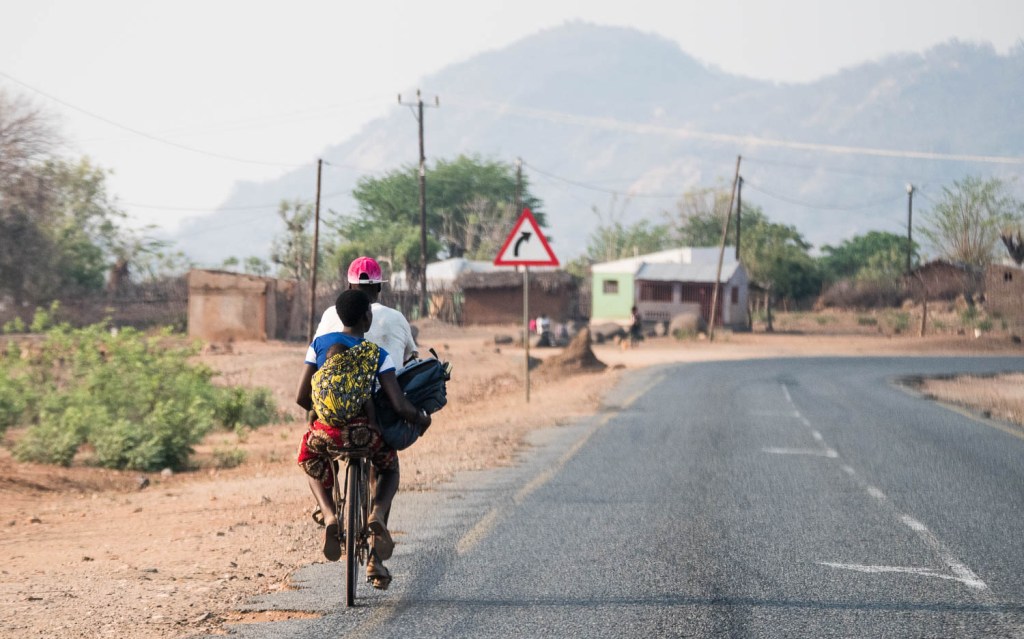
We are not the travellers who complain about potholes. I will however voice my respect for the potholes on the N7 and then later the N1. The potholes are so big that ten ton trucks go in and then come out of the other side of these potholes. Even the small potholes will take two thirds of your vehicle’s tyre in depth and they don’t look like they will until you’re almost right on top of them. The sand in the area is very unique, a white powder, maybe loamy which reflects light strongly. The vertical sides of the potholes are sheer and because there is no visible bottom to view in relation, the sides of the potholes look like they are the floor of the pothole. We don’t understand this trick of the light until we are almost on top of one and then scream because the few centimeter deep pothole is actually anywhere up to half a metre in depth. The potholes are to be respected in Mozambique.
We drive carefully down to Chimoio. There is a flagged fuel station on the iOverlander app just before Chimoio which sells food so we stop for burgers, chips and cokes. Completely refuelled, we take the side route running down parallel with the N1. It’s nice to drive through some more laid back places where people are just living their lives.
The road improves dramatically and a few suburbs and houses give way to agricultural land which quickly itself turns to wilderness. To the west the Chimanimani mountains, on the border with Zimbabwe, begin to appear until we are rising up the lower part of the same mountain range. Either miombo woodland or montane forest surrounds us as we wind up the mountain with official warning signs for elephant. The Chimanimani mountain range (along with some other hideouts) are said to be one of the reasons that the elephant species wasn’t hunted to extinction in Africa. Small herds of elephants were able to hide amongst the tall trees and thick foliage for centuries while the ivory trade boomed and piano keys tinkled.
The forest and woodland give way to banana plantations etched in contour to the slope. Stilted houses with banana leaf thatched roofs are fixed to the side of ridges. Children run around in the villages we pass and there is a sense of prosperity and normality. The going is slow behind trundling banana trucks but we don’t mind as the east face of the mountain has now opened up and we are looking down on hundreds and hundreds of kilometers of Mozambique stretching out in front of us to the ocean. The road winds slowly down until we join the vista we were staring at only a few kilometres back up the road.
Back into low level rural lands the drive takes us to another small town on the banks of a river where we turn off on to a dirt road. We drive along beside the river for about fifty kilometres where we finally join the N1. An awesome little side trip that we were not expecting!
The potholes return and my respect goes up a few notches when I note that even the bridges have potholes. I keep on expecting wily coyote to stick his head up through one.
We stop the night at another secure and fenced location out of an abundance of caution. We just make it in before sunset. Some home-made cold meats, bread rolls and mayonnaise in our room and then the motel graciously sells us some cheap 2M beer in a decent lounge and restaurant.
Mozambique primarily has three beers I am aware of. 2M (dosh em), Manica and Txilar (tchilar). All have their good points and are most importantly much cheaper than their international friends. 2M is a good beer but has the slight feeling of having had alcohol added separate to the brewing process. Not true I’m sure but it does pack a bit of a bang. Txilar is much smoother but can get a little watery after a while. Manica, to be honest, I can’t remember much of but it gave a good note of “this is beer”!
Save River, and on to the coast
The drive to Inhassoro in late October is an adventure and new sights of Mozambique dopple by with place names like Banana and Save. The Save river crossing is single file over a temporary metal bridge while the new bridge is being built. The new bridge is now rescheduled to be complete in 2023. The upgraded bridge will have improved defences against climate change enhanced cyclone hits. As I am writing this, Cyclone Freddy has recently hit the Save river area and then hit it again on the way back to the Indian ocean. You can imagine the impact that cyclones of this magnitude wreak on people whose houses are often largely constructed of wood and thatch. Easy to blow down but easier to rebuild I assume.
The Save river is also a major political and historical landmark. The river is marked as the dividing line between southern and central Mozambique with the Shona speaking people to the north of the river and the Xi-tsonga speaking people to the south. This can broadly be seen as the line between the old civil war divisions of frelimo (south) and renamo (north). The Save river is also one of the main transport routes used to transport gold from the area of the ancient Great Zimbabwe up until to the fourteenth century. The river’s source is from the highlands of Zimbabwe behind the Chimanimani mountain range that we drove along on the way down.
We have seen many reports of unpleasant military stops at Save bridge, but the most we experienced was an ask for a cold coke and then a friendly wave when we gently shrugged off the request. And on to the coast we go.
 The Colour of Travel
Leave a comment