Luderitz to South Africa, April 2022
With a brief stop in Keetmanshoop for a lawyer (selling our apartment) we head south for our final Namibian site, the Fish River Canyon. We are both sad to think that our one month trip through Namibia is coming to an end but also excited knowing that the tropical eastern coastline of Mozambique is to come next.
We turn down a final gravel road to Hobas. One of the few access points to the Fish River Canyon. We are not sure if we want to stay the night at Hobas or Ais-Ais so pop in to see what Hobas is like first. The NWR campsite looks nice and has a pool but Ais-Ais has natural hotsprings which we have been dreaming of since about halfway through the deserts of Namibia so we head down to Ais-Ais. The name Ais-Ais means “Hot-Hot” in the ancient San language which makes us giggle.
Unfortunately Ais-Ais NWR resort has a few problems when we get there. First of all the hot springs pools are not working because of a plumbing issue. Something that will only be fixed by tomorrow. Secondly, the Fish River Canyon proper is actually back at Hobas. There are also many more weekend trippers here so we decide to head back to Hobas and enjoy the amazing scenery again on the drive back.


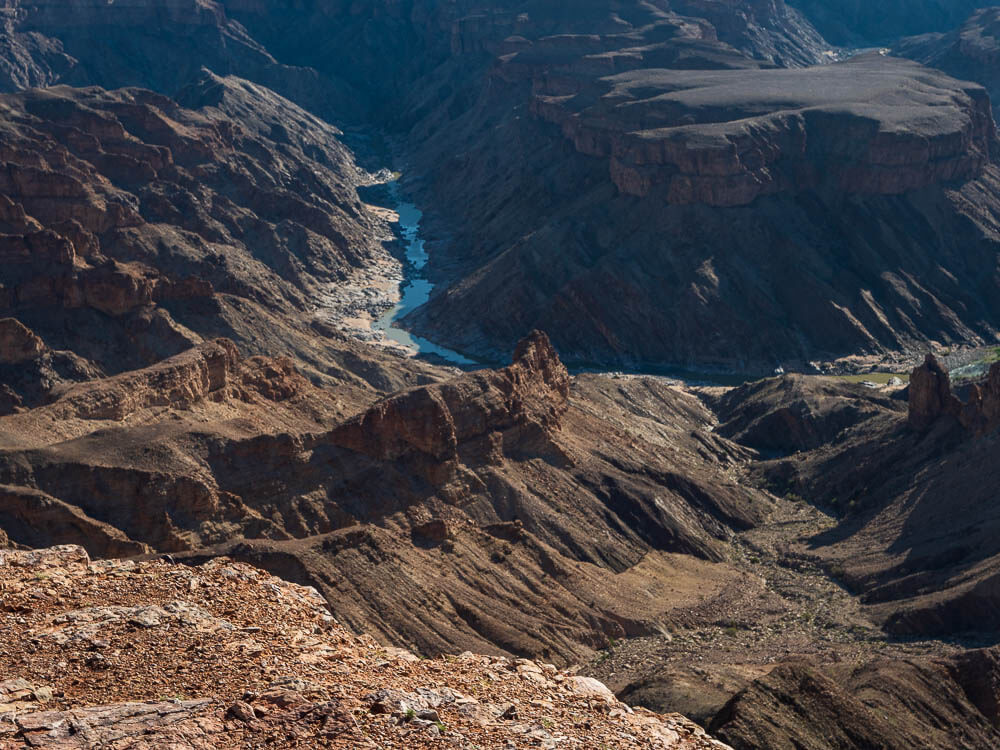


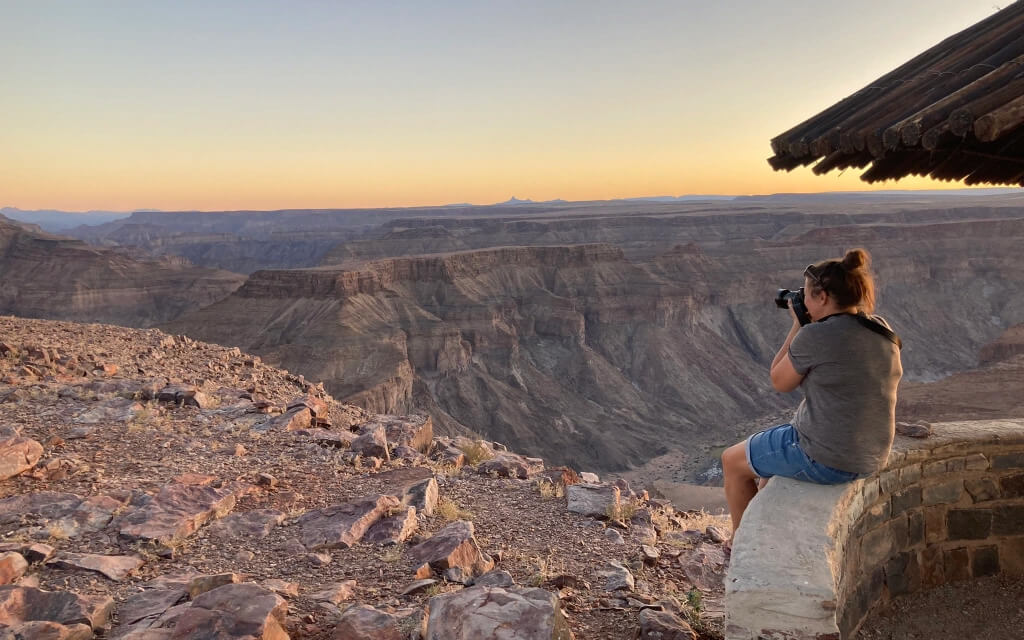
The Fish River Canyon is the second largest canyon in the world. Back in Hobas we are lucky enough to sit on the edge of the canyon watching the sun set without a single other person near us. The Fish River Canyon is the second most popular tourist site in Namibia and the emptiness is a reminder of the impact that the covid pandemic has had on the entire planet’s population. The canyon’s walls are layered in strata of ages and we feel small and humble on the edge of millions of years of continental shift, glacial movement and the eroding habits of a single river. When Gondwana land split apart hundreds of millions of years ago the land in this area tilted making the Fish River run faster and ultimately able to cut through the gneiss rock which had held the river’s pools for so many aeons previously.
That evening at the campsite we battle the return of the locust population, leaping mindlessly into any and every light source whether that be fire or our headlamps. No matter how many times it happens, a locust leaping unexpectedly into our faces ensures some expletive or scream. We sadly have our last meal in Namibia around the fire.
The next morning we pack up slowly and are surprised to see the groundskeepers burning a lot of dead trees and wood. The fire is about ten metres high and not very far from some poor guy’s tent.

So we sadly waved goodbye to Namibia and exit at the border town of Ariamsvlei. It is always difficult to know how much time to spend anywhere on a long journey and we could easily have stayed another month in Namibia. The adventures of the Caprivi Strip and the Okavango alongside the privilege of being able to see Etosha, Skeleton Coast, the Namib Desert and the Fish River Canyon are all of equal and honest appreciation.
 The Colour of Travel
Leave a comment