
Brandberg Mountain into the Kunene Region, April 2022
With the midday sun above us we head further north. Our plan is to find a campsite that we might want to stay at for more than a night. For this reason, we turn off the gravel road going to Khorixas and wander around the Namib desert in search of said camp. The feeling of really being in the nowhere now is palpable. Old rusty pickups and sedans are seen irregularly along the dusty road and waving hands are replaced by stares and whisperings.
We pass a handful of campsites in the afternoon but they either look deserted or are deep off of this dust track. We don’t have a reservation nor cellphone signal. The scenery has again changed by degrees of sand colour and heat but the desert is most definitely continuing. The sand is lighter, deeper and the air is drier. We finally find a likely looking option in the iOverlander offline app (our ever trusty accommodation finder) and head in that direction for about an hour.

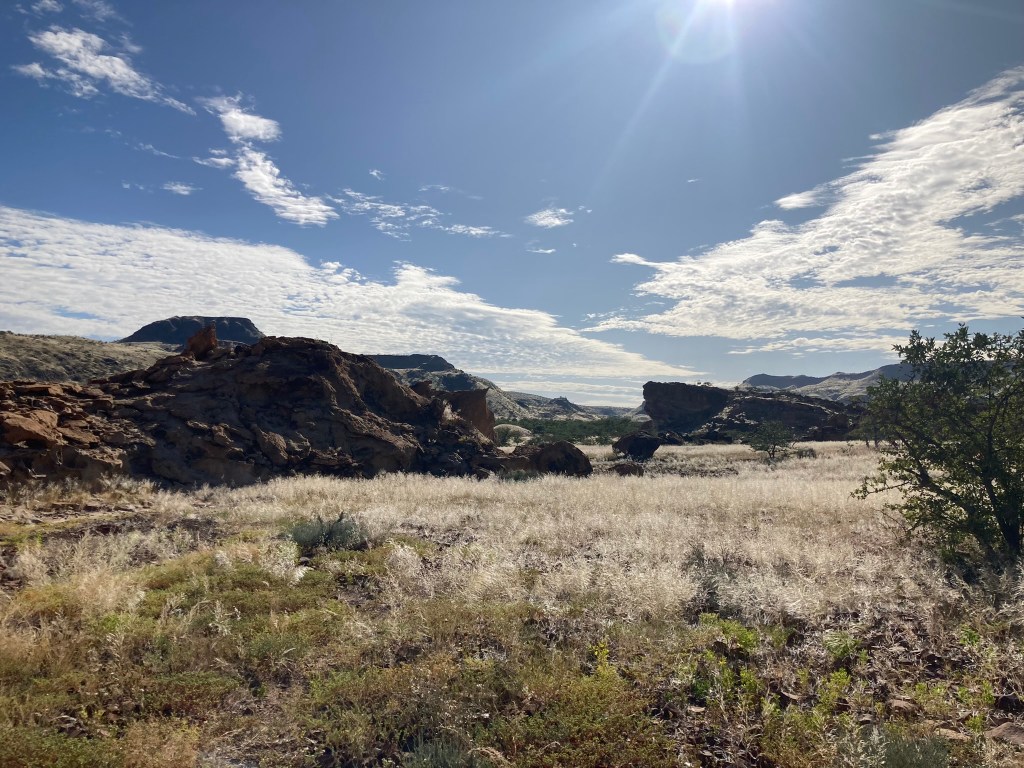
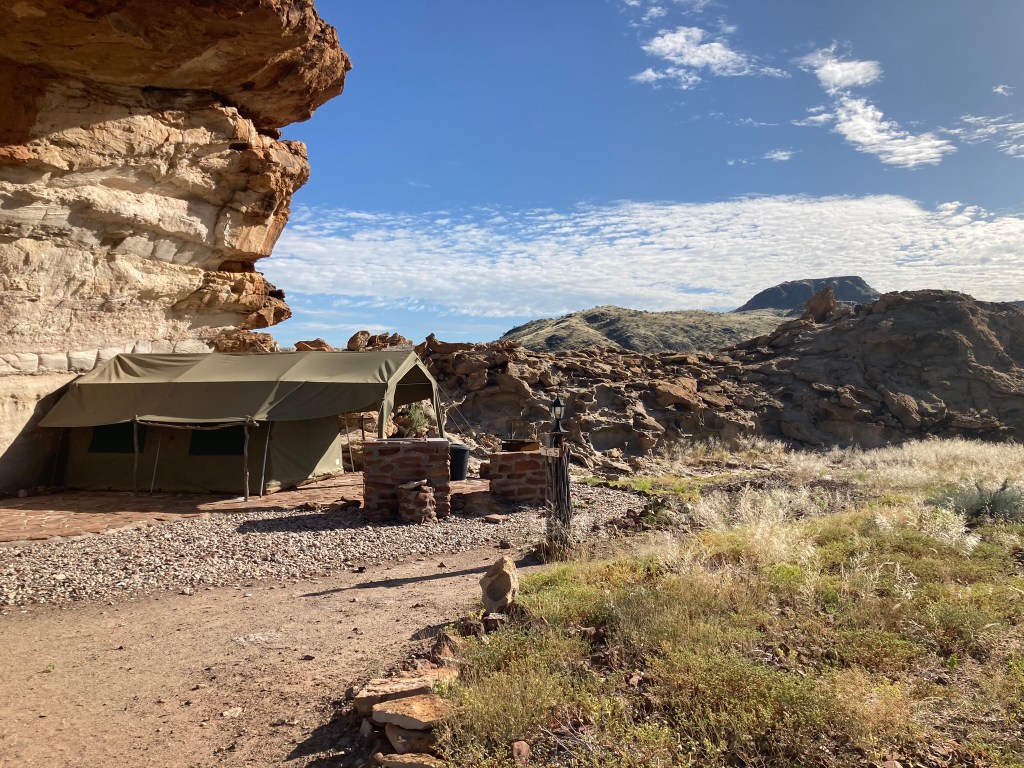


The campsite is starkly beautiful with large overhanging rocks, and huge insects scraping and crawling their barbed legs over the sand towards us. The owner is a nice enough German person at the beginning of meeting but in course of conversation has revealed some old-school tendencies by the end so we feel a little put out. We sneakily change the plan to one night accommodation instead of the potential two or three. I’m starting to think I wouldn’t mind getting to the coast anyway.
We leave early in the morning after a deep sleep on the outer edge of the Namib desert. We have been traveling up along the eastern border of the desert since leaving Omukuruvaro. Now we head east as we want to see the Petrified Forest. We skip the unofficial petrified forest sites and end up at the official National Monument site.
We were pleased to see a few more tourists at the site than just us. Hopefully the tail-end of the pandemic will bring much needed tourist money back to these distant communities.
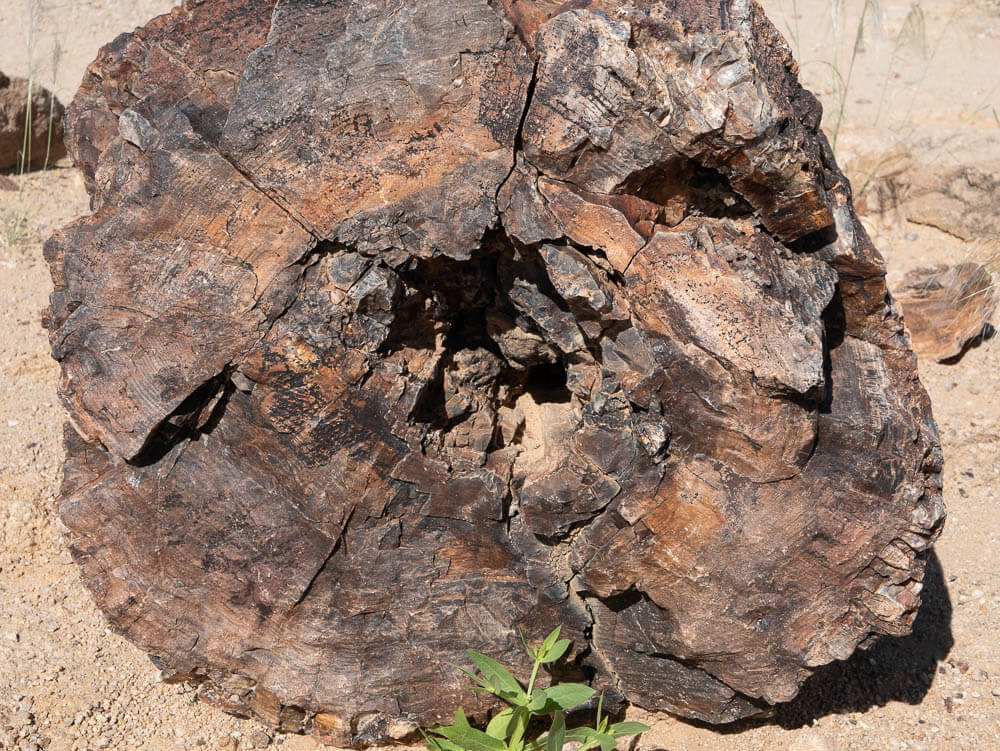
Our guide takes us on an easy 30 minute walk. The tree fossils are mind-bogglingly ancient. 280 million years old! Deposited reportedly by a massive flood of water in the times of Pangaea. Two of the fossilised trees are over 40 metres long.


Growing in the surrounding dry red gravel are also some living fossils. We are introduced to the Welwitschia Mirabilis plant and told that the plants we are looking at now are around 150 years old. This is actually fairly low in age for a welwitschia which can survive for over a thousand years. Some are estimated to be as much as two thousand years old. The plants have only two leaves and these striated leaves grow out opposite each other like two streams wending through time. The parts of the leaves closest to the centre of the plant are thick and green tapering in colour and vitality towards ashen and slashed remnants of themselves from ages past. The plants have both male and female versions and we are shown the differences by observing the larger female cones.
We leave the national conservancy area awe-stuck and humble. Namibia is the keeper of our ancient times embalmed by time and rock.
 The Colour of Travel
Leave a comment