
Etosha to Brandberg Mountain, April 2022
Uis, Rare Stones & Defence
After Etosha we restock in Tsumeb and relax for two nights. The olympic-size swimming pool at Kupferquelle Resort is useful this time as the weather has warmed from our rain-sodden stay a week back. We also take full advantage of the overlanding luxury that is a washing machine and dryer.
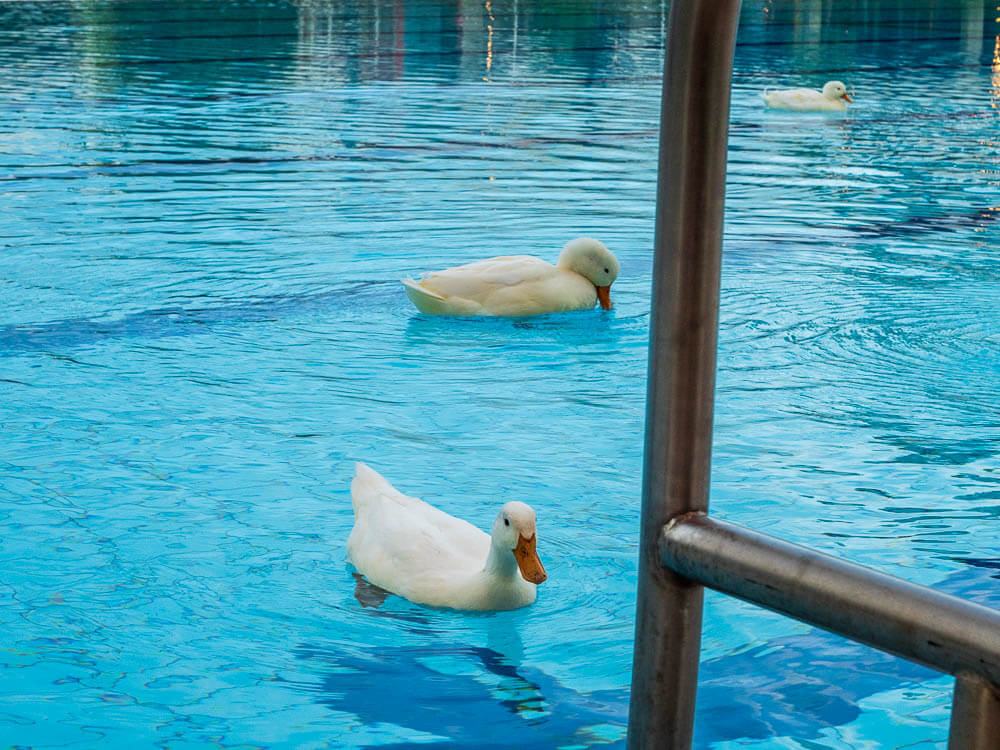
We’ve noticed on our overlanding trip since Botswana that we are struggling to find the space to exercise regularly. We aren’t massive health freaks but do like to have a quick run most days. Each place we have been to for the past weeks has either been “watch out for wild animals” or we have felt timid running around an unknown area. This is reducing our health endorphins and increasing our donut endorphins. Doing some laps in the olympic-sized pool helps to regain some mental and physical balance. We share the pool with the resident ducks who clearly think they are the true owners of this vast pool.
We leave Tsumeb a few days later after stocking up on some bbq meat and biltong. We are not too sure where we are going at this point only aware that we want to end up at the Skeleton Coast. There are mentions of ancient stone-age cave paintings in the Central Western Plains and we decide to head in that direction to see what we can see.
The road out of Tsumeb is tarred and easy driving as we ascend to the higher plains through valleys and mountain passes. The surrounding grasses become drier and the land devoid of much more than an intermittent town or village which act as refuelling stops for us and an entire life for many of the inhabitants.
By midday we have arrived at a small town called Omaruru. We are excited because there on the high street is the eponymous fire-lighter factory, Omuriro Fire-Lighters. They have been helping us light our daily fire’s to date in Namibia. This is the smallest town we have stopped in so far and I am absorbed by the feeling that it is a bit of a special place. Some towns and areas are run-of-the-mill, others are useful or functional but every once in a while you run into an area that has its own sense of place. A special feeling that makes me think of old hugging gum trees, fried-green tomatoes (sorry) and homely verandas with paint peeling. There are some local artists and we wander through their range of work as we wait for two very expertly made cappuccinos for take-away.
We’re not interested in staying in Omaruru. There isn’t a viable option for accommodation in our price budget. So we turn off the tarred road onto the gravel-road to Uis.
The land starts to flatten out inviting us to gaze even further over the desolate Namibian grasslands, sand and stones. Distant and remote long-bladed inselbergs rise up cutting jagged shadows into the air in the afternoon light. Some of the inselbergs are more traditional dome-shaped remains of the same eons-long erosion.
Uis appears to be an even smaller town than Omaruru and for the first (and I think only) time in Namibia I get a bit of a fright from one of the local people.
We pull into the small fuel station in Uis and ask for a top-up of diesel . The feeling of approaching or being on the outer edge of a real desert is becoming palpable. A slightly fuller tank of fuel will make us feel safer but I don’t want to go full tanks (we have an additional tank fitted). Two full tanks will make us heavier and we might struggle with sand tracks as we approach the dry land proper if weighed down.
While the fuel attendant disappears to get the card machine a local man approaches me with a basket of semi-precious stones. I’m blown away by the selection ranging from deep amethyst to ruby-brick somethings or other. There are maybe fifteen different types to choose from and I am struggling to name most of them. I feel better when reading up on these stones later and seeing how unique many of them are to the areas of Namibia. I apologise to the man and say I’m not interested today. I don’t know the rules on buying stones in Namibia, haven’t got a clue with regards to value and wouldn’t know a fluorite from a demantoid anyway. He is at least nice and we have a small chat until the fuel attendent returns with the card. The fuel attendant doesn’t seem put out by the stone salesman’s presence in any way.
We have a strong policy of tipping on this trip. We tip restaurant staff 10-15 percent, accommodation staff about one dollar per day, car guards about fifty cents (USD), fuel attendants about one dollar (USD) and musicians a random amount depending on the amount of beer or rum consumed. We don’t generally give to non-working people because that is a bit of a how long is a piece of string approach and there are community initiatives often available which go much further.
I feel sorry for this stones man in the baking sun however and give him a dollar alongside the fuel attendant because it’s hot and we’re in the middle of nowhere. He is gracious in acceptance and seems to be pleased with the result. Kirsty is not yet back from the toilets. Suddenly, by my right shoulder with me standing by the open door of the car a very pushy second stone salesman asks for some money. He seems upset that the other guy received something but him nothing.
I don’t like the way he has approached me so I say “No, I’m sorry, that’s all I have.”
He is right up on me and I’m jammed in the open car door. I get in the car and try to close the door but he deliberately stands in the way. At every point in this small happening I have no real way to balance or protect myself as he is always in my personal zone to the side or behind me. Some people are pushy but this guy is aggressive and leering. He’s looking for an opportunity to become incensed. I quickly start the car and drive forward, he tries to follow but I make enough centimetres in gain to close the door by a whisker and my traveling companion has luckily sneaked around the front of the car in the middle of the exchange. Kirsty is in the car. Doors locked, we hoot at the asshole and head off.
I have received “danger zone” training in my professional career before and the most important lesson I learned was do not escalate a situation. My instructor taught me this by almost bending my wrist in two in a role-play exercise. I had tried to subdue him. Ah! I felt like an idiot and the instructor made sure I felt it. This lesson was reinforced through survival in a sticky situation in Belize in the past also. Back in Namibia, I could have tried to push the man away from the door opening or become angry but probability of success from antagonistic actions is much lower than defensive strategies.
The plan had been to see if there is somewhere to stay in Uis but we don’t like the remote dust bowl so much now and head off North towards Khorixas.
Burning Mountain, Dry River Beds & Ancient Rock Paintings
Soon we realise we are in a very different and unique part of Namibia never mind the World. Having entered the Namib Desert we pass simple mud-hut homesteads and people dressed in minimalistic traditional clothing. We have entered the domain of the Himba people, a subsistence culture that lives with little and relies on much less. The women are a red ochre colour matching the hot surrounding sands and gravel. The skin colour is due to a paste called otjize which is a mixture of butterfat and hematite pigment. Before milking the livestock each morning the Himba woman applies the otjize paste. This acts as a cosmetic, mosquito repellent, body moisture retention cream as well as an exfoliating cream. Reportedly, the Himba women are not allowed to wash themselves with water and must bathe using smoke, charcoal and herbs each day due to traditions formed from water scarcity. Himba men are polygamous and may marry Himba girls at an early age although underage marriage is illegal according to the laws of the Namibian republic.
On the Ugab River being the border between the Kunene Region in the North and the Erongo Region in the South lies the Brandberg White Lady Lodge. The lodge and sand campsites are baking in the afternoon sun. We look forward to finishing with camp setup to gather some rest after the long dusty drive. The Ugab River running alongside the campsite is devoid of any moisture. A couple of dirt bikers are tearing through the riverbed. While setting up an infrared motion camera in a tree I very nearly put my finger on a hidden scorpion.
The nearby Brandberg Mountain is red in the evening sunset realising the apt name of burning mountain in Afrikaans, Dutch, German and Damara languages. The Herero name for the mountain is mountain of the gods (Omukuruvaro). The mountain is the site of over one thousand rock shelters and about fourty five thousand rock paintings. We plan to visit tomorrow.


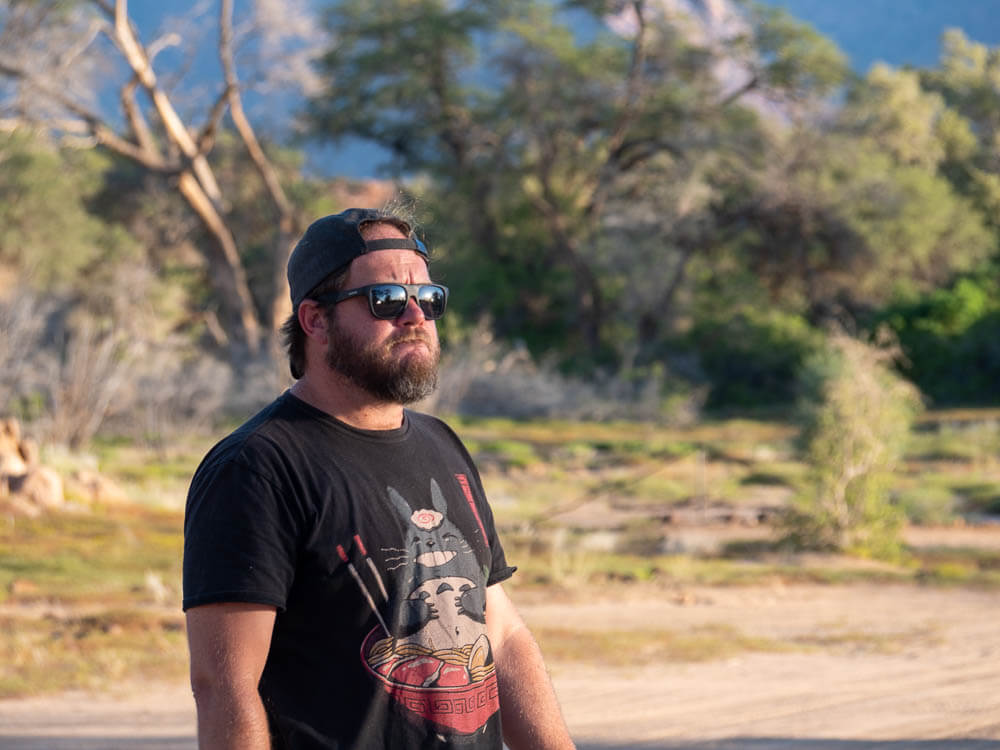


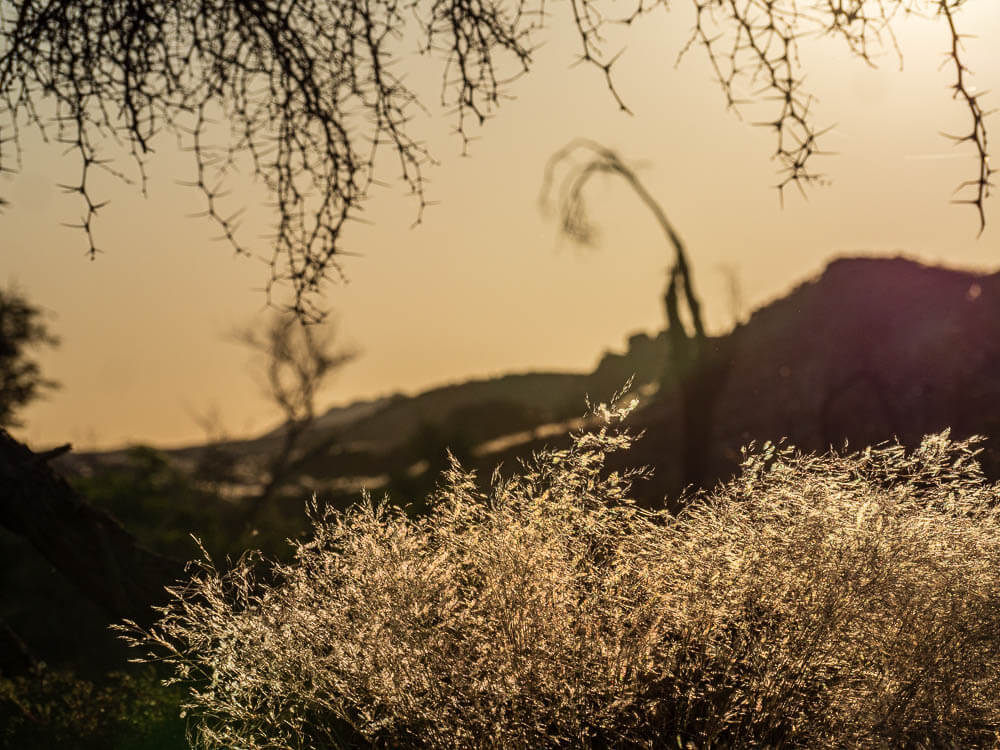

The evening is sweet and sour. Sweet with the campfire, food, drinks and blanket of stars in what I think is my first desert overnight experience. Sour with the sound of farm-boy music coming from the dirt biker camping pitch.
We wake the next morning and I suggest we move on as I don’t see much point in baking on a sand camping pitch in the middle of the desert next to bad bad music. Hell has been described as less before.
So we break camp and head off to Omukuruvaro, the mountain of the gods.
The national monument reception area is almost empty and we park alongside the only other vehicle in the tourist parking area. Another tourist area hit by the covid downturn. We are allocated a guide who tells us to take water as it’s a couple hours excursion. For the full two hours of the hike we pass only one other group on the return journey.
Our guide is a local man who doesn’t concern himself with a drop of water the entire hike. We walk up a valley alongside the Tsiseb stream fed by the aquifers in the granite cliffs of the mountain surrounds. Impressive considering that the Ugab River bed where we camped is bone dry. Thousands of tadpoles wriggle and ripple in the clear granite pools. Frogs in the middle of the desert!
I ask perceptive yet at the same time dumb tourist questions like “Can we eat the tadpoles?” and “How can I find an aquifer if lost?”
The patient guide responds that these tadpoles are bad for you but there are frogs up North that can be eaten. The guide probably speaks four different languages at least. He also says you “have to look for aquifers” which I nod at vigorously in understanding. The guide points out a rock which looks like a monkey head. It’s called monkey head rock.
The guide emphasises the possibility of taking life-changing longer hikes in the mountain. Multi-day hikes are required to climb the mountain proper and he says he has seen Westerners completely change their perspective on the long hikes.
The day is cool from some cloud cover and the guide reminds us that we are lucky. The heat of the day can often be significant and we have left it late in the morning to do this walk.
We arrive at the rock paintings in the late morning. Some of the paintings are five thousand years old! Some, but not many, slightly faded due to previous generations dousing the ancient rock art with water to enhance colours and contrast. Why is it that previous generations become progressively worse the further back in time you go?! Maybe the kids should be minding the adults.

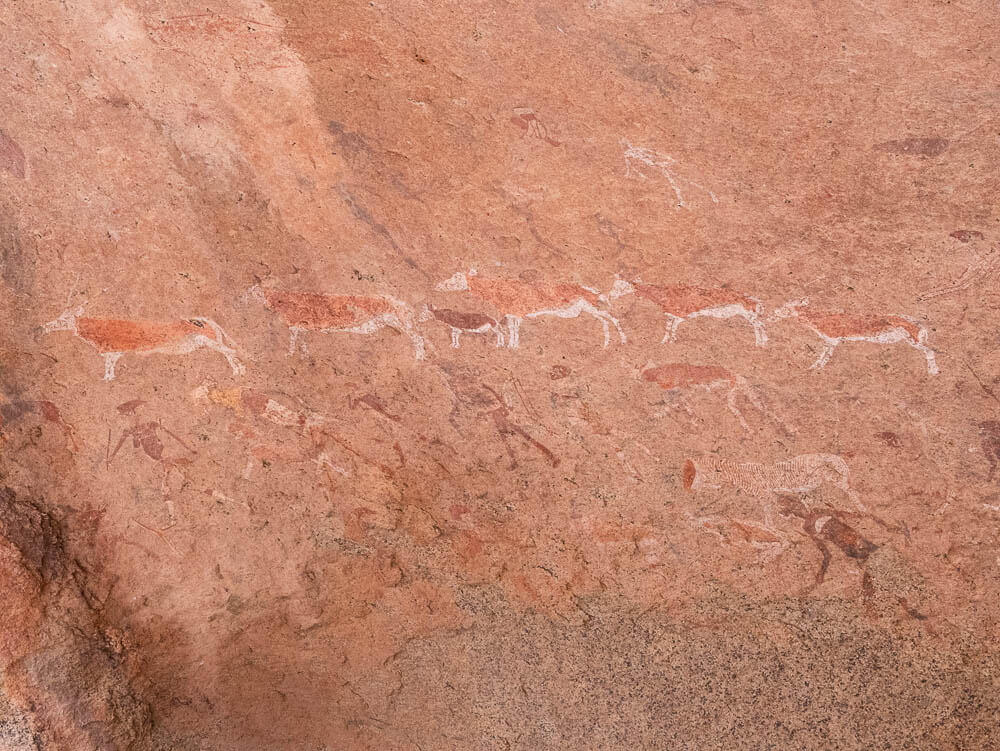


The rock paintings are exceptional with ancient San people depicted with their bows, arrows, sticks and medicine man finery. Antelope with fine detail are hunted by spirits and an eland’s shoulders shadow the shape of the eternal mountain ridge still standing behind this ancient cave. The famed White Lady (discovered subsequently not to be a lady at all) sits in amongst the many other paintings. We sit and appreciate the aeons of preservation in front of us.
The mind struggles with the the distance in time between this ancient people and land from us. A glimmer of a wish drifts through your mind that you might want to tell these ancient scribes a little of now to them as they have mentioned the past to you. Maybe one day.
Our guide allows us to sit, stare and ruminate for long enough so that we agree to peel ourselves away at his suggestion. We walk back chatting still and pass the ancient Tsiseb stream bathing pools, spot the rock hyrax nesting spots, skip over the bubbling tadpoles and round past the odd looking dassie rat named by our guide in English. Back to the visitors centre once more. We guiltily avoid the curio shop but make sure we give our guide a decent budget traveler tip to thank him for his amazing knowledge.
We are now witnesses to a unique and ancient site.
Places I would go back to? Omukuruvaro (Brandberg) Mountain for a multi-day hike.
 The Colour of Travel
Leave a comment