
Guma Lagoon to Tsodilo Hills, March 2022
The Tsodilo Hills are deep into the north western Botswana wilderness. They can be found near to the border with Namibia on the opposite side of the Khaudum National Park. The hills are famous for their array of rock paintings which are spread throughout the small area. Over five hundred different sites exist in the hills and some paintings are over 20,000 years old. The UNESCO World Heritage website cites that evidence suggests homo sapien activity occurred in these hills from as much as 100,000 years ago.
There are various trails which cover the area crossing over and under the three hills. These hills are named Male Hill, Female Hill and Child Hill. We opt for the Rhino Trail which is the more standard route chosen by most and seems to be an excellent choice by our reckoning.
The covid pandemic has decimated the tourist industry in Botswana. We are the only tourists in the entire area whilst there. To give a sense of this, our guide tells us that before covid there were usually at minimum thirty people a day. And we have this entire stone age site to ourselves. A small problem with the reduced footfall however is that a local herd of elephant has decided to take up residence in the hills. Instead of being able to walk the full rhino trail we are advised to drive part of it in our vehicle for our safety, along with the mandatory guide.
Our guide is local. He is usually providing guide services to the larger wilderness areas of Botswana but with the exodus of tourists he has returned home to Tsodilo Hills where he grew up. Financial income must be difficult based on the numbers. A tacit agreement exists in many parts of southern Africa where local people have chosen to allow their land to be given over to conservation with the understanding that local communities will benefit from this. It is a matter of survival for both the society and the environment. We can only hope that the tourist economies return as the campsite facilities at Tsodilo Hills are already starting to fall into disrepair.
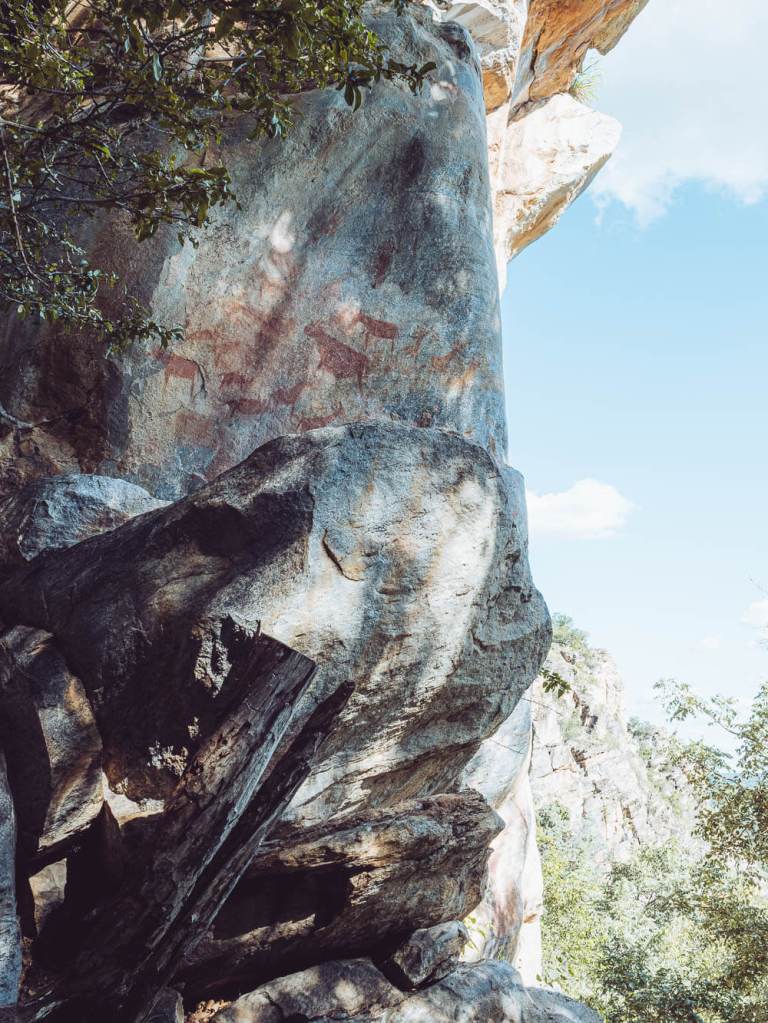
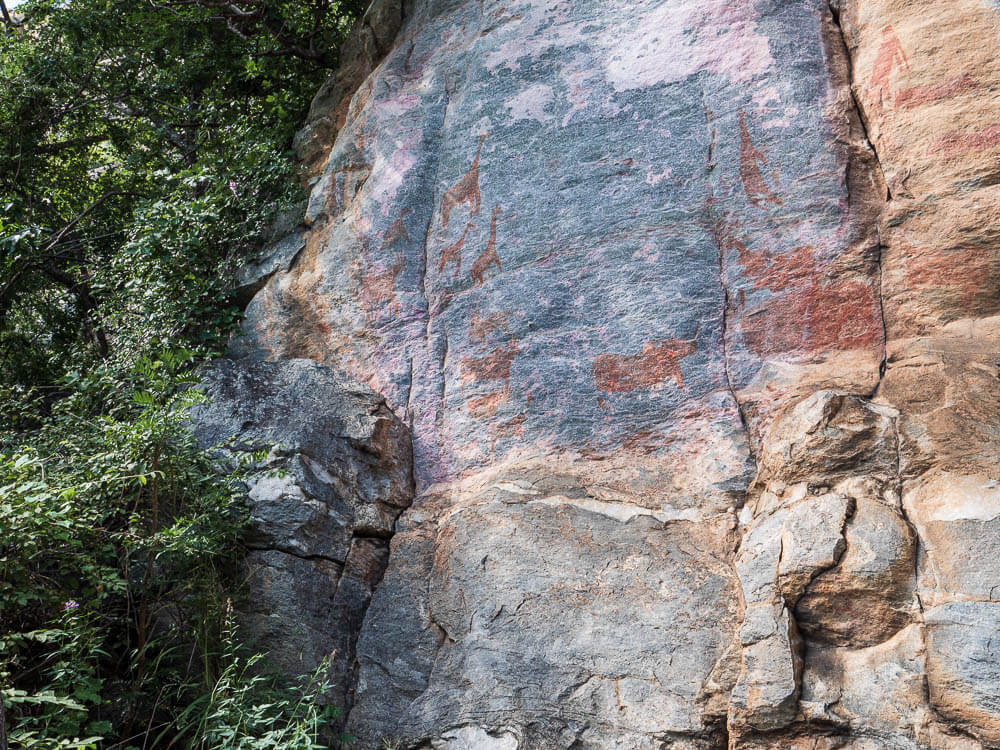
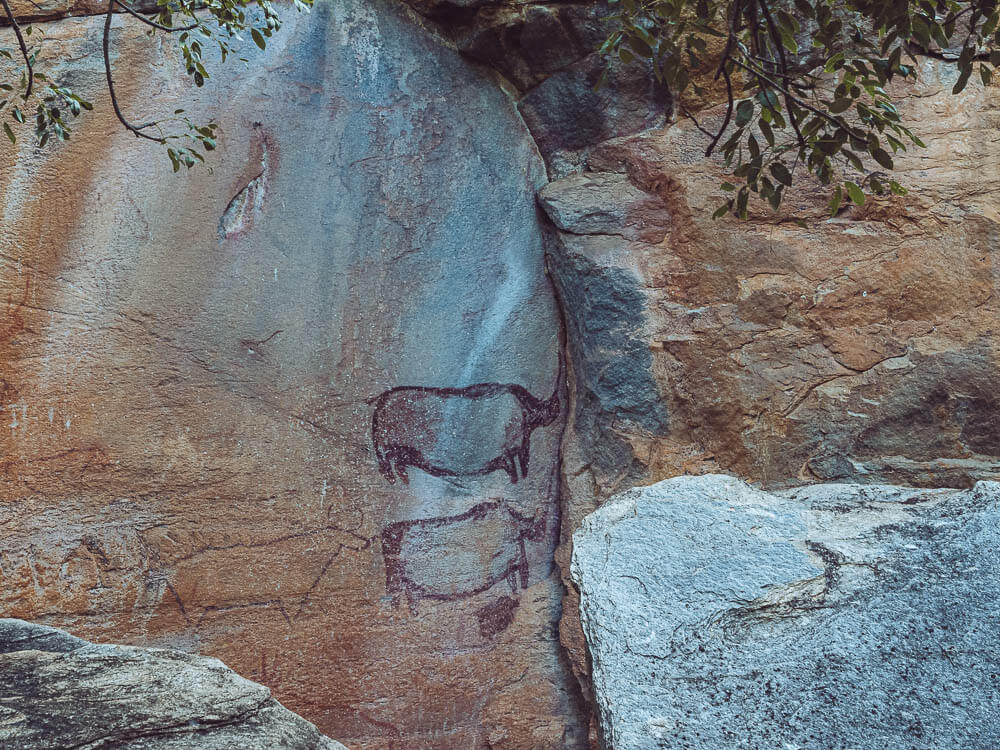
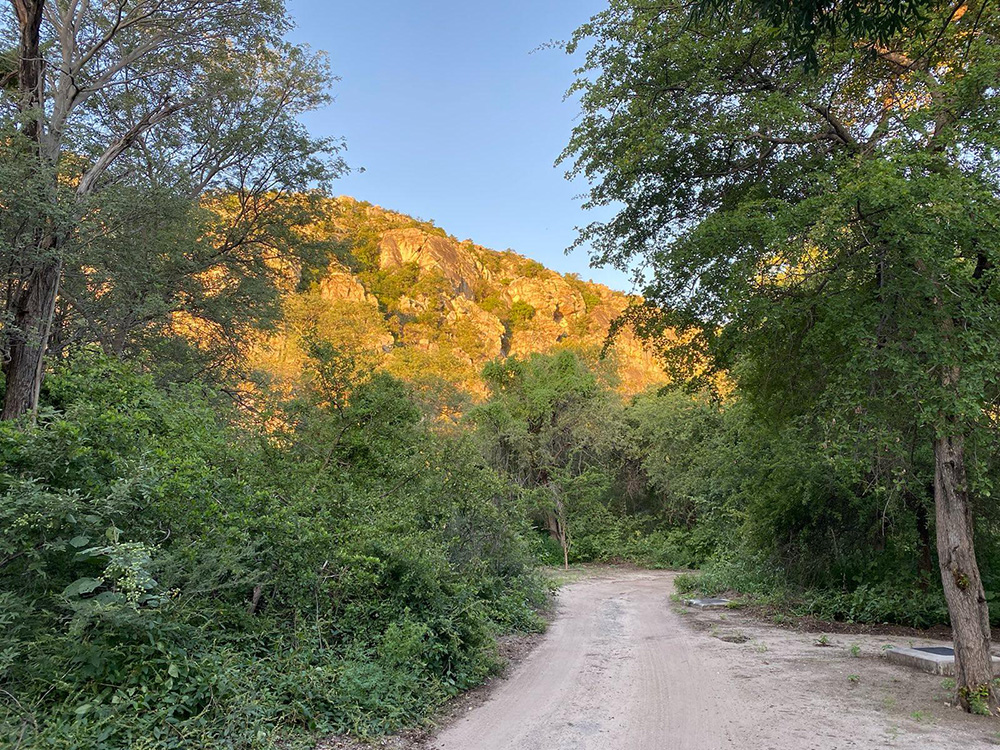
We begin by driving to the base of the Female Hill. The rock paintings are exceptional and we can’t believe how well preserved they are. Tens of thousands of years and brush strokes still remain. A re-evaluation of time is indeed required when travelling in Africa. We then drive westwards to another section of the Female Hill and climb a not insignificant flight of stairs up the cliff. We see various painting sites along the way and are grateful to have other things pointed out such as the subterranean source of the local stream, ancient San arrow sharpening rocks, local fruit trees and ancient pottery fragments.
The Female Hill is essentially a high ridged quartzite cliff tapering down as a valley to the level below. The Rhino Trail follows this section and is an excellent walk even without the paintings. The San and later Hambukushu Bantustan peoples used the valley for hunting and the cliffs and rocky outcrops for habitation and rituals.
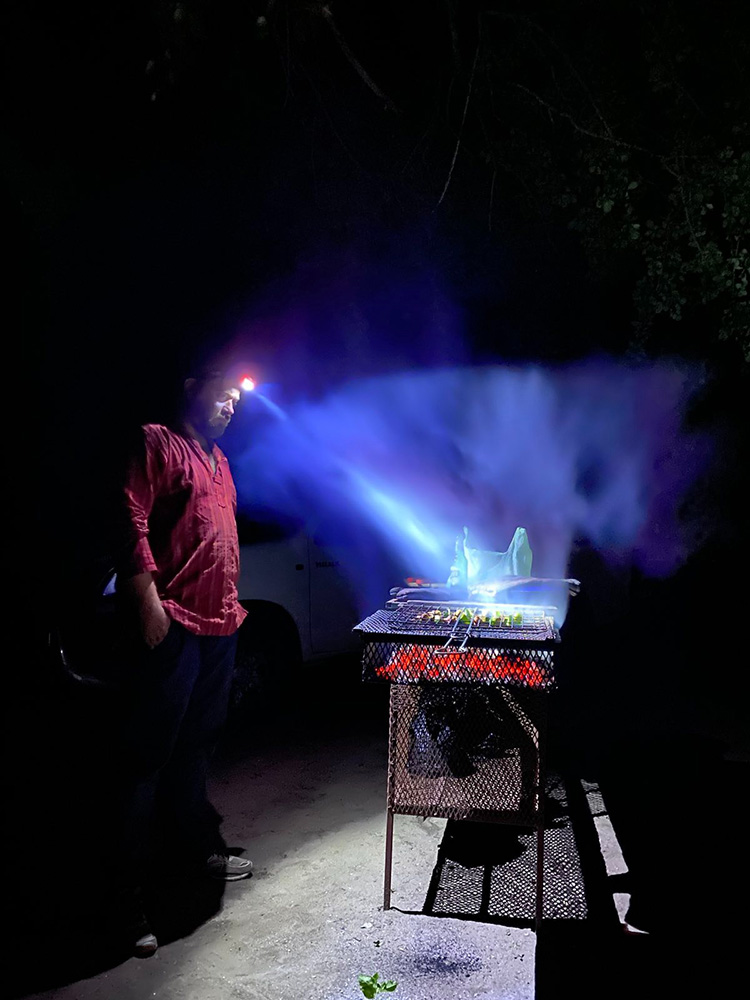
Because of the decimation of tourism from covid the normal camping grounds are closed but we are able to camp next to the museum/reception for a nominal price. Wood fired steaks under the stars on an ancient neolithic site is perfection.

We leave for Namibia the next day.
 The Colour of Travel
Leave a comment