Francistown to Nata, March 2022
Most people adventuring in Botswana will pass through Nata sooner rather than later. Being a little mean to a grand place, this is because you tend to need to go through Nata to get to somewhere in Botswana. A township of six to seven thousand people spread over 25 square kilometers it is also one of the major gateways to the Makgadikgadi Pans.
The Makgadikgadi Pans are an essential refuge for migrating wildebeest and zebra during the rainy season. The pans offer an abundance of nutrient rich grass. This area is also a bird-watchers paradise with seasonal migrations of both lesser and greater flamingos as well as the great white pelican. Predators such as cheetah and black mane lion can also be seen during the antelope migrations. The best time to visit the area for all of the above is between December and March.
We are most definitely, in March, in the rainy season and after the deluge from the night before we are racing against the weather forecast which is prophesying an even larger and longer deluge in the early afternoon. We do not like driving in heavy rain at the best of times and low visibility with large potholes on single lane highways is something to avoid. We have camped at Nata Lodge before and had a great time (even with a honey badger stealing our fuel tank breather). We don’t however feel like being holed up in a tent with no access to dry cooking facilities and so find another budget option called Eselbe Camp.
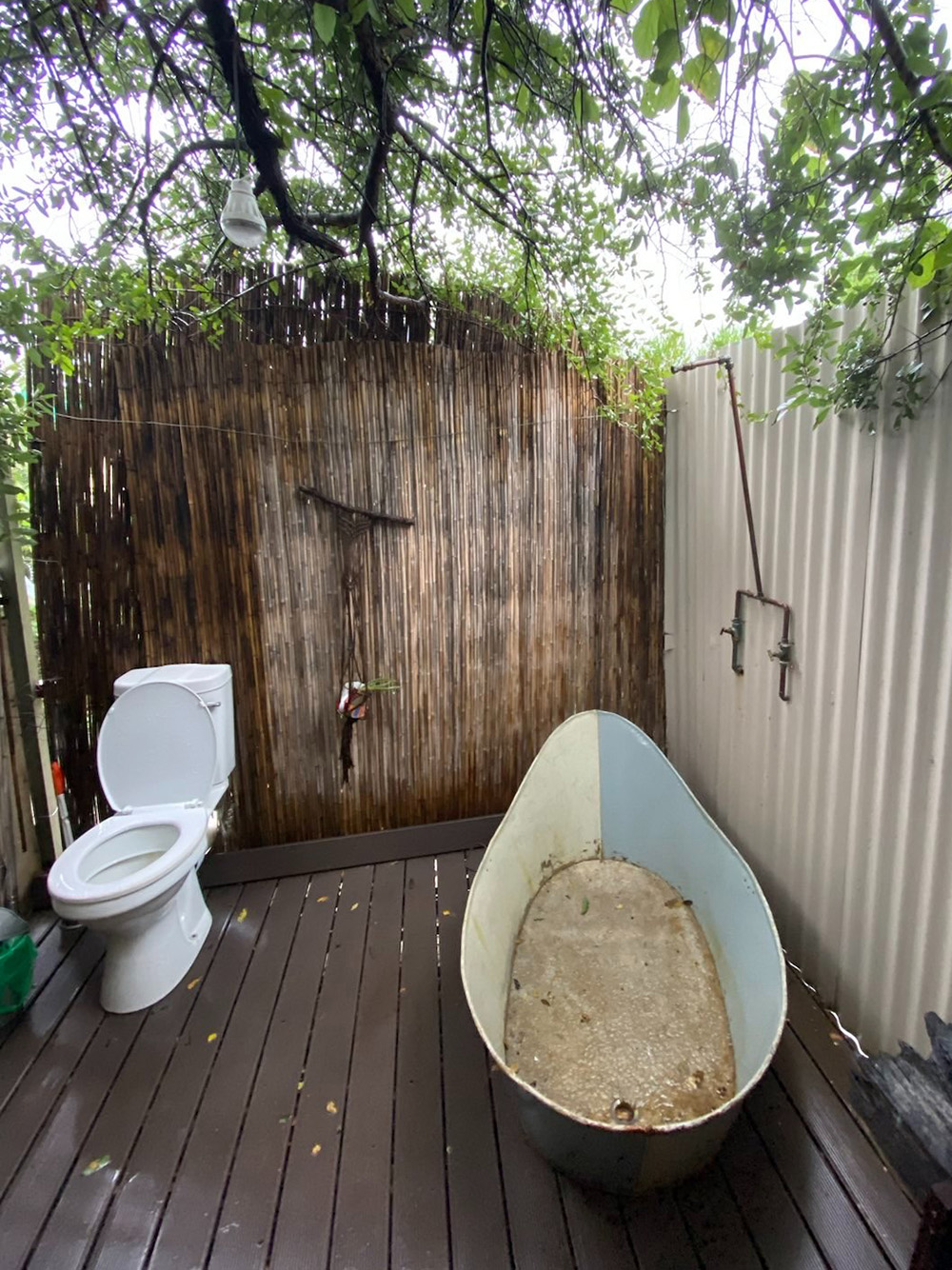
Eselbe Camp is a proper backpackers. By proper I don’t mean cheap and dingy. Eselbe is a place built with imagination to allow for fun, singular adventure and diverse meets, greets and chats. At an affordable backpacker price of course. We opt for it because it advertises a large semi-permanent tent structure as well as a dry communal kitchen. Our room is basically an old, large safari tent pitched under a corrugated roof supported by wooden stilts. The tent has a comfortable bed and couch. It also has an en-suite bathroom with no roof so you can shower without even turning the taps on and have to time your toilet break by the hourly weather forecast. We really like it.
On arrival there is a German guy packing up his tent and fitting it to his bicycle. I have a chat with him before he leaves and warn him of the rain and pot-holes to come… on the single lane highway. He doesn’t seem overly perturbed, but patiently thanks me for the information. I found out later that the guy is a German tourer who has cycled from Europe to Nata to date. I guess he’s seen worse.
Eselbe backpackers is almost directly on the Nata River. The rain arrives early afternoon as forecast and falls hard for hours. We catch up with some reading and listen to the pleasant sound of African rain crashing around us, the rain releases a pungent bouquet of plant and soil. We wonder how high up the banks of the Nata the river might flow in the deluge.
The rain’s intensity reduces in the late afternoon enough for Kirsty to head off to the communal kitchen to begin the evening meal. I stay well away as she has a pressure cooker in one hand, a determined look on her face and I know that the kitchen hot plate is on a gas stove.
I instead, savouring the non-cooking duty evening, pop open a beer and settle myself on the veranda. Half way through the beer and in the now half-light I notice a slight movement out of the corner of my eye. Snake? I grab my torch and peer into the brush. Reflecting right back at me are two large moons of eyes. Ah! A bush baby! This gives me about thirty minutes of play hunting along the edge of the camp for bush babies and watching them bounce around evading me. These small primates are incredible to watch in their dexterity. I watch one bush baby in the pitch dark (I had a red light on) bounce vertically from upright to upright on the border fence. The moholi bush baby must have done four upright bounces a metre apart in the space of a second.
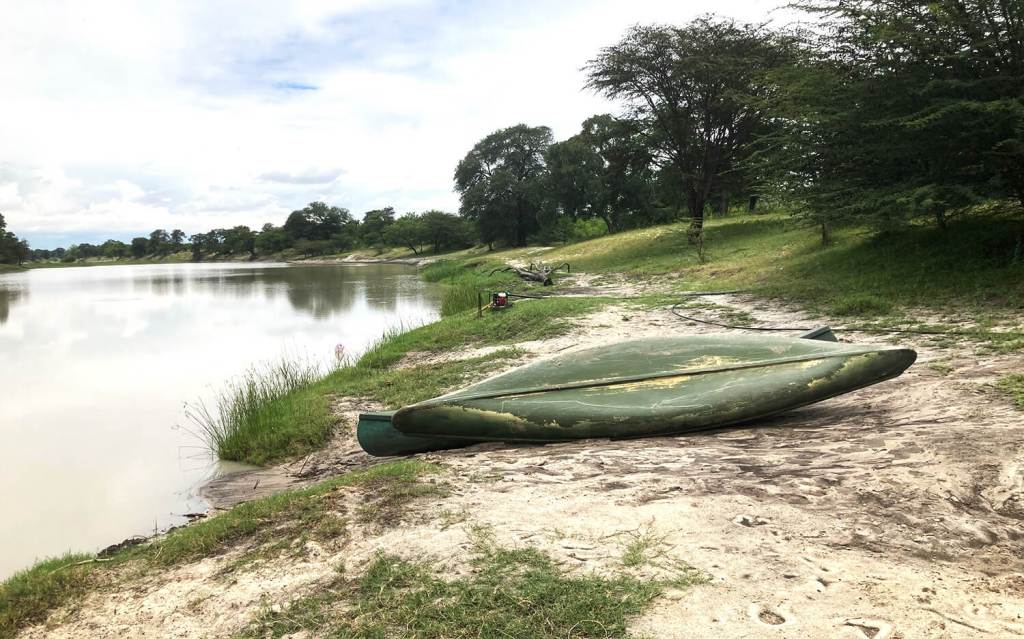
The evening meal is fun. We chat to Rupert (the owner of Eselbe) and commiserate on the years long loss of guests due to Covid. We all agree that his backpackers will make a strong comeback in the coming years. Rupert has settled his camp away from the main road along the river Nata. It is secluded and you can step to the river bank in a matter of seconds. On the bank are a selection of canoes which Rupert is happy for you to use. At the end of the rainy season he organises canoe trips down the final leg of the Nata which runs straight into the Sua Pan, one of the largest bodies making up the Makgadikgadi Pans area. The Makgadikgadi used to be a large lake system tens of thousands of years ago and is quite possibly “the” or “a” genesis region for the evolution of homo sapiens hundreds of thousands of years ago.
The rains fall hard again all night but the forecast is clear from tomorrow onwards.
 The Colour of Travel
Leave a comment